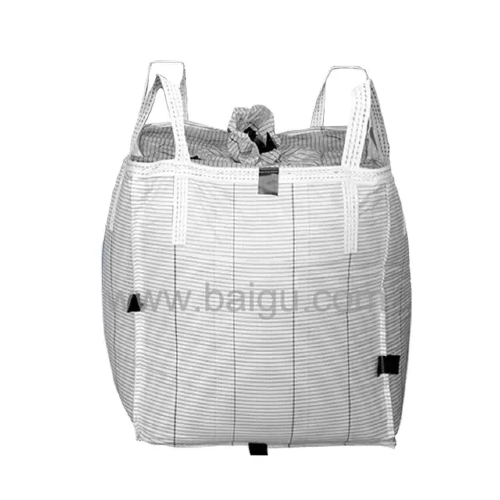
Transporting volatile, hygroscopic, or combustible chemicals demands far more than standard bulk packaging. When your facility handles sensitive compounds, your packaging acts as a primary safety defense. Incorrect selection frequently leads to catastrophic static discharge explosions, severe product contamination, or crippling regulatory penalties. Procurement and safety managers face immense pressure to get this right every single time. We built this strict evaluation framework to help you navigate these complex, high-stakes packaging decisions. You will learn how to specify the correct Chemical FIBC Bags based on core material data, specific handling environments, and global compliance mandates. By aligning your packaging choices with rigorous safety standards, you protect your personnel, maintain chemical purity, and streamline your operational logistics. Let us explore the critical technical parameters you must evaluate before finalizing your packaging specification.
Key Takeaways
Always base your FIBC specification on the material’s Safety Data Sheet (SDS) and Minimum Ignition Energy (MIE).
Handling hazardous materials legally requires globally certified UN Bags with specific Packing Group ratings.
For combustible powders, grounded Type-C Bags or anti-static Type-D bags are non-negotiable to prevent electrostatic hazards.
Assessing vendor trustworthiness requires auditing their in-house testing protocols and material traceability, not just unit price.
Defining the Chemical Profile and Compliance Baseline
Every successful packaging strategy begins at a single decision gate. You must carefully cross-reference your chemical's Safety Data Sheet (SDS) against current international transport regulations. This initial review effectively prevents hazardous compliance failures.
Hazardous vs. Non-Hazardous Evaluation
You must first determine if the product legally requires a globally certified UN Bag. International transport frameworks mandate these specialized containers for dangerous goods. Regulatory bodies classify hazardous materials into specific UN Packing Groups based on inherent danger levels. Standard bulk containers cannot legally transport materials holding a high-danger classification.
Let us review the UN Packing Groups relevant to flexible intermediate bulk containers:
Group II (Medium Danger): Requires extensive structural drop and tear testing to ensure absolute containment under stress.
Group III (Low Danger): Requires baseline hazardous material certification and standard drop tests.
Group I (High Danger): Regulators generally do not permit FIBCs for Group I materials. You must use rigid steel or high-density plastic drums instead.
Physical State Considerations
Understanding the precise physical state of your product dictates your basic Chemical Bag architecture. Your engineering team should assess three critical physical parameters:
Bulk Density: This metric determines the required fabric weight and internal structural reinforcement.
Particle Size: Micro-fine powders demand specialized sift-proof construction to prevent leakage.
Flow Characteristics: Sticky or cohesive materials require wider, specialized discharge spouts to prevent bridging.
Implementation Risk
Many organizations make a critical compliance error here. They fail to align their official testing certificates and their precise chemical formulations. The certification must match the exact chemical compound transported. If you alter a minor additive in your product, the original certification becomes completely invalid. You must re-certify the container anytime the chemical composition changes.
We recommend these best practices for initial SDS evaluation:
Always review Section 9 of the SDS for specific gravity and bulk density metrics.
Check Section 14 for specific transport hazard classes before selecting a container.
Consult an internal safety advisor to interpret complex overlapping regulations accurately.
Static Electricity Control: Evaluating Type-C Bags vs. Alternatives
The Business Problem
Fine chemical powders create massive friction during high-speed filling and discharging phases. This rapid mechanical movement generates dangerous levels of electrostatic charge. In volatile environments, a single trapped spark can trigger catastrophic facility explosions. You must control this energy effectively to protect your personnel.
Technical Breakdown
You have several structural options for static control. Selecting the right option ensures compliance and safety. Let us evaluate the primary categories using a clear classification chart:
FIBC Classification
Mechanism of Action
Grounding Required?
Safe for Combustible Dust?
Type A
No static protection. Standard woven fabric.
No
Strictly Prohibited
Type B
Low breakdown voltage fabric. Prevents propagating brush discharges.
No
Yes (if no flammable vapors exist)
Type C
Conductive threads channel electricity safely to the ground.
Yes (Absolute Requirement)
Yes (Safe for all combustible environments)
Type D
Specialized fabric dissipates charge directly into the atmosphere.
No
Yes (Safe for all combustible environments)
Type A and Type B units lack robust active static protection. They remain suitable only for completely non-combustible environments. We rarely recommend these standard units for complex chemical processing operations.
A properly grounded Type-C Bag provides excellent protection through its interwoven conductive threads. However, this relies entirely on a critical operational assumption. It remains safe only if your facility maintains strict, infallible grounding protocols. If a ground wire detaches during discharge operations, the container itself instantly becomes a lethal ignition source.
Type D containers operate differently. They actively disperse electrical charge directly into the surrounding atmosphere. They accomplish this without any physical ground connection. You should specify Type D units whenever you cannot guarantee proper grounding protocols at the receiving destination.
Evaluation Criteria
Your final specification must align closely with your laboratory data. You must match the container type directly to the Minimum Ignition Energy (MIE) of your specific chemical dust. You must also evaluate the surrounding facility environment carefully. If flammable solvent vapors exist near your filling station, your static control requirements increase dramatically.
Contamination & Moisture Defense: Coated Fabrics and Liners
The Business Problem
Hygroscopic chemicals absorb moisture rapidly from the surrounding air. This rapid absorption causes expensive compounds to clump, harden, and degrade entirely. Furthermore, ultra-fine powders easily sift through standard woven polypropylene microscopic gaps. This sifting causes severe yield loss and creates dangerous secondary environmental hazards inside your warehouse.
Solution Categories
You have several technical solutions available to combat moisture and sifting. Your exact choice depends heavily on the specific vulnerability of your chemical compound.
Coated vs. Uncoated Fabrics: We strongly recommend adding a protective lamination layer to the woven fabric. This thin polypropylene coating effectively seals microscopic gaps. It prevents dry powders from migrating out and stops ambient moisture from entering.
Seam Specifications: Standard sewing needles leave tiny holes behind. For ultra-fine powders, you must specify sift-proof seams, commonly known as dust seams. Manufacturers sew soft felt or sponge filler cords directly into the stitching. This physical barrier blocks microscopic particles from escaping during rough transport.
Sometimes exterior coatings simply do not provide enough defense. Highly sensitive materials require specialized internal liners. Let us explore the specific benefits of different liner structures:
Form-Fit Liners: These mimic the exact shape of the outer fabric accurately. They prevent powder from trapping in folds, ensuring complete and safe discharge.
Aluminum Foil Liners: These provide the ultimate barrier against both moisture and oxygen. We mandate these structures for highly reactive compounds.
High-Barrier Polyethylene: A versatile and popular choice offering moderate moisture protection while maintaining excellent container flexibility.
Cost-to-Outcome Ratio
Procurement teams must carefully balance the investment of these complex barrier liners. You should weigh this initial investment against the potential outcome of chemical degradation. A ruined production batch or a rejected shipment carries massive financial consequences. Investing in advanced moisture defense prevents costly facility cleanups and ensures product integrity.
Structural Integrity and Handling Mechanisms
Safety Factor (SF) and Safe Working Load (SWL)
Protecting your personnel requires absolute structural integrity from your bulk containers. Engineers measure container strength using strict Safety Factor (SF) ratios. You must specify a 5:1 SF rating for standard single-trip usage. This rating means the container withstands five times its rated load during destructive testing. For multi-trip applications, transport regulations legally mandate a 6:1 SF rating.
You must also match the Safe Working Load (SWL) precisely to your production batch sizes. Chemical processing batches typically range from 500kg to 2000kg. Never exceed the stated SWL under any circumstances.
To achieve these high ratings, reputable manufacturers subject the containers to brutal physical testing:
Top Lift Testing: Machines pull the lifting loops with extreme force to ensure they do not snap under load.
Drop Testing: Fully loaded containers drop from specific heights to verify the fabric withstands sudden impact stress.
Topple Testing: Engineers push filled units over to test side-wall burst resistance.
Facility Integration (Filling & Discharging)
Your bulk packaging must integrate seamlessly into your existing facility equipment. Open-top containers present a massive liability for hazardous chemicals. They expose workers to airborne dust and increase external contamination risks. We strongly mandate closed spout tops to ensure completely dust-tight filling operations.
Discharge mechanisms require equally careful evaluation. Spout bottoms equipped with star closures or specialized iris valves provide excellent flow control. These reliable mechanisms limit operator exposure and prevent sudden powder avalanches during the discharge phase.
Baffle Designs
Standard cylindrical containers bulge outward when filled with heavy powders. This bulging creates inefficient, unstable shapes for transport and racking. You can solve this issue by using inner baffles. Sewn interior baffles maintain a rigid, completely square footprint after filling. This engineered shape maximizes your container shipping efficiency and significantly improves long-term warehousing stability.
Vendor Shortlisting: How to Audit an FIBC Manufacturer
Evaluation Dimensions
Not all packaging suppliers operate at the same regulatory standard. You must separate high-tier technical manufacturers from simple commodity brokers. A true manufacturing partner intimately understands chemical industry regulations, structural testing, and compliance mandates.
Testing Capabilities
Always question a vendor about their internal quality control infrastructure. Ask if they possess dedicated in-house testing rigs. They should routinely test fabrics for accelerated UV degradation, overall tensile strength, and sustained antistatic performance. Relying solely on external third-party labs often delays critical quality interventions.
Traceability
Robust traceability separates excellent vendors from average ones. Ensure every single container carries a uniquely trackable lot number printed clearly on the label. This identification number must tie directly back to the original resin batch used during the tape extrusion process.
Facility Certifications
You should demand recognized global certifications from any potential supplier. Look closely for ISO 9001 quality management credentials. If your chemical overlaps with food-grade or pharma-grade requirements, you must mandate ISO 22000 certification. Additionally, verify they utilize verified Clean Room manufacturing environments. Clean rooms drastically reduce the risk of dangerous foreign object contamination.
Consider asking these key audit questions during your review:
Do you extrude your own polypropylene tapes, or do you purchase them from third parties?
How frequently do you calibrate your tensile strength testing equipment?
Can you provide a documented chain of custody for your anti-static resin additives?
What specific procedures do you follow to clean your extrusion machinery between different production runs?
Next-Step Action
Never transition your entire packaging volume blindly to a new supplier. Always request initial sample runs for rigorous internal testing. Demand to see full, unredacted UN testing certificates before you commit to annual volume contracts.
Conclusion
Sourcing specialized chemical packaging remains a strict exercise in risk management and compliance. The right container effectively protects your valuable product, your personnel, and your company's legal standing. You cannot afford to treat these technical containers as simple, interchangeable disposable commodities.
We highly recommend prioritizing technical alignment over marginal cost savings. Ensuring strict SDS matching, robust static control measures, and verified UN certification guarantees long-term operational success. A minor upfront saving easily evaporates following a single compliance fine or contamination event.
Take immediate action to review your current packaging inventory. Prompt your procurement team to consult directly with a certified packaging engineer. Alternatively, submit your chemical SDS to an expert manufacturer for a comprehensive, custom specification review. Proper due diligence today ensures a safer, more efficient facility tomorrow.
FAQ
Q: What happens if a Type-C bag is not grounded during discharge?
A: Un-grounded conductive bags act as massive capacitors. They store dangerous levels of electrostatic energy inside the fabric. When this trapped energy finally finds a path to ground, it releases a catastrophic incendiary spark. This spark easily ignites surrounding chemical dust or flammable solvent vapors. You must strictly enforce grounding protocols to prevent lethal explosions during filling and discharge operations.
Q: Can I reuse UN-certified Chemical FIBC Bags?
A: You can reuse them only if the manufacturer specifically designed them with a 6:1 Safety Factor. Standard 5:1 single-trip units remain strictly prohibited for reuse. Furthermore, international transport regulations mandate rigorous inspection and professional cleaning protocols between uses. You must carefully log every trip and immediately discard any unit showing minor abrasion, UV degradation, or contamination.
Q: How do I prevent fine chemical powders from leaking through the seams?
A: Standard stitching leaves microscopic holes behind. You prevent leakage by specifying sift-proof construction for your containers. Manufacturers insert double filler cords made of felt or soft sponge directly into the stitched seams. These cords block fine particles effectively. Additionally, you should incorporate high-barrier internal liners perfectly suited to your specific particle size to guarantee zero powder migration.