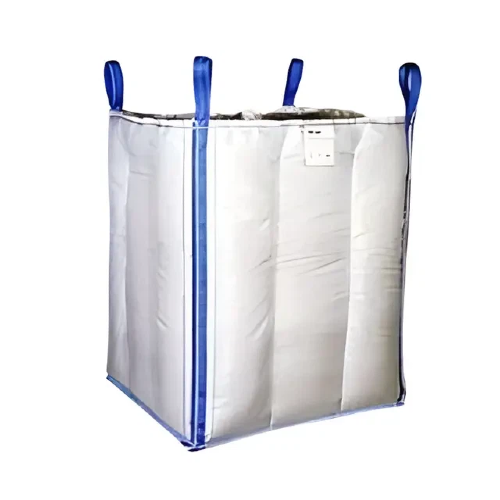
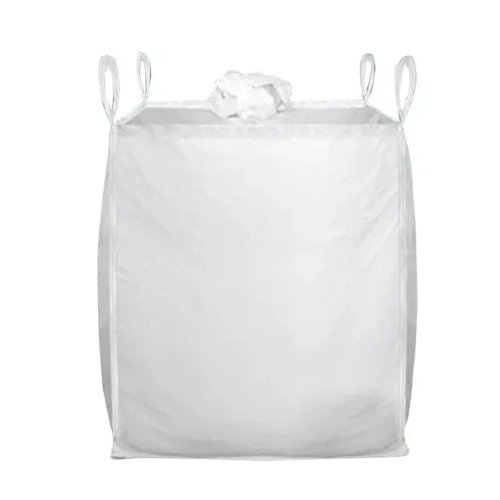
Food grade FIBC bags are vital for a safe supply chain, but do you know what truly separates them from standard industrial bags? While basic bags work for chemicals, food-grade versions must meet strict regulatory benchmarks to prevent contamination. In this guide, you will learn about essential safety standards and material requirements for bulk food transport.
Key Takeaways
●Material Purity: Food grade bags must be manufactured from 100% virgin polypropylene resin to eliminate the risk of chemical migration or contamination from recycled materials.
●Cleanroom Production: These specialized containers are produced in strictly controlled cleanroom environments to manage air quality and prevent foreign particles from entering the bag.
●Regulatory Compliance: High-quality bags must adhere to international safety standards, including FDA regulations in the U.S. and EU food contact laws in Europe.
●Global Certifications: Certifications such as ISO, BRC, and SQF provide essential third-party verification that manufacturing processes meet global food safety best practices.
●Advanced Barrier Protection: Incorporating specialized liners is crucial for transporting fine powders or moisture-sensitive foods to ensure an extra layer of protection against contaminants.
●Rigorous Performance Testing: To ensure safety during transit, bags undergo intensive top lift, compression, and contamination screening tests before delivery.
●Strict Traceability: Effective food logistics depend on robust systems that track each bag from the raw material stage to the finished product for audit accountability.
Defining the Standard: What Makes an FIBC Truly "Food Grade"?
A food grade bulk bag is fundamentally different from a standard industrial bag because it is engineered for direct food contact without the risk of contamination. The primary distinction lies in the raw materials; these bags are manufactured using 100% virgin polypropylene resin. This specific material choice is a non-negotiable baseline because it is free from recycled contaminants or harmful additives that could migrate into the food supply. While recycled plastics are common in general manufacturing, they are avoided in food applications unless specifically certified to prevent chemical transfer.
The manufacturing environment is equally critical to the definition of a "Food Grade" standard. High-quality FIBCs are produced in controlled cleanroom conditions where humidity, air quality, and foreign particles are strictly monitored. This environment transforms a standard container into a "Clean Bag," minimizing any risk of environmental pollutants entering the packaging.
Feature
Standard FIBC
Food Grade FIBC
Material Source
Recycled or blended PP
100% Virgin Polypropylene
Production Area
General factory floor
Controlled Cleanroom
Safety Protocols
General QC
HACCP & Hygiene Practices
Contaminant Screening
Visual inspection
Vacuum & Metal Detection
To eliminate foreign contaminants, facilities employ specialized procedures such as vacuum cleaning and metal detection to remove microscopic particles before shipping. They also prioritize the absence of unapproved chemicals, ensuring the bags meet the criteria for "direct contact" rather than just secondary packaging.
Tip: When sourcing, always request documentation confirming the use of 100% virgin resin to ensure no recycled materials compromise your product's purity.
Navigating Global Regulatory Frameworks for Food Grade FIBC Bags
Compliance is not merely a label; it is a complex legal requirement that varies by region. In the United States, the primary authority is the FDA. Food packaging materials must adhere to CFR Title 21, which specifies exactly which polymers and additives are safe for food contact to prevent harmful chemical migration during storage.
European regulations are equally stringent, focusing heavily on traceability and migration testing. These laws ensure that plastic materials do not transfer substances to food in quantities that could endanger human health or change the food's composition. Beyond regional laws, global businesses often look toward the Global Food Safety Initiative (GFSI). Certifications like the BRC Global Standard or SQF provide an extra layer of assurance, proving that the entire manufacturing process—from facility hygiene to hazard control—is audited and compliant with international best practices.
●FDA Compliance: Ensures no chemical migration under US law.
●EU Regulation: Mandates strict plastic testing and traceability.
●ISO Certification: Provides a globally recognized framework for food safety management.
●HACCP Integration: Identifies and controls physical, chemical, and biological hazards in the production line.
Note: ISO certifications are often essential for companies looking to export food products internationally, as they are a widely accepted benchmark for safety.
Engineering for Safety: Material Integrity and Barrier Technology
Effective food transport requires more than just a strong bag; it requires advanced barrier technology. For moisture-sensitive goods like protein powders or fine grains, manufacturers often incorporate specialized inner liners made from polyethylene or other food-safe polymers. These liners act as a secondary defense against oxygen, moisture, and external contaminants.
Engineering for safety also involves structural integrity. Sift-proofing and specialized seam constructions prevent fine powders from leaking through needle holes, while also blocking contaminants from entering. In environments where combustible powders like sugar or flour are handled, electrostatic safety becomes paramount. Integrating Type C (conductive) or Type D (static dissipative) properties into a Food Grade FIBC Bag prevents dangerous static discharges. Furthermore, because these bags may face outdoor loading or long-term storage, UV protection is added to the virgin resin to ensure the material remains stable and does not degrade, which would otherwise compromise the food inside.
A bag that looks safe must be proven safe through real-world performance testing. Compliance is verified through several rigorous physical evaluations to ensure the bag maintains its integrity under the heavy loads of bulk transport.
1. Top Lift Testing: This evaluates the bag's ability to handle its rated load capacity, often requiring a 5:1 or 6:1 Safety Working Load (SWL) for secure lifting.
2. Compression Stability: Stacked bags must remain stable in warehouses. These tests simulate the pressure of multiple bags resting on top of one another to prevent tipping or collapse.
3. Contamination Screening: Beyond physical strength, "Clean Bag" status is confirmed through metal detection and vacuum cleaning to eliminate foreign particles.
4. Chemical Migration Analysis: Regular laboratory tests are conducted to verify that no substances from the bag material transfer into the food product, meeting FDA and EU migration limits.
These procedures ensure that every Food Grade FIBC Bag delivered to a customer is strong, reliable, and chemically inert.
Tip: Regularly review migration test reports (not just certificates) to understand how the bag material interacts with your specific food product.
Supply Chain Traceability and Documentation
Even a perfectly manufactured bag can become a liability if it is not handled correctly after leaving the factory. Modern supply chains require robust traceability systems where each individual bag is tracked from the raw resin batch to the finished product. This allows food businesses to prove compliance during rigorous audits and quickly isolate any issues.
Essential documentation that should accompany every order includes:
●FDA Compliance Letters: Confirming materials meet US food contact standards.
●Migration Test Reports: Proving the material is safe for the intended temperature and storage time.
●Material Safety Data Sheets (MSDS): Detailing the chemical composition of the bag materials.
●ISO/GFSI Certifications: Validating the manufacturing facility’s hygiene standards.
Proper handling is the final step in the safety chain. Clean storage environments prevent contamination before use, and regular inspections ensure the bags remain structurally sound. Staff training in sanitary handling procedures is crucial to maintaining the hygiene standards established in the cleanroom.
Note: Traceability isn't just about safety; it is a critical requirement for businesses to pass food safety audits and maintain their operating licenses.
The Business Impact: Why Quality Standards Drive Success
Choosing high-quality, compliant packaging is a strategic business decision. Non-compliance is more than just a regulatory hurdle; it represents a significant risk to the company's financial health. Using non-food grade bags can lead to product contamination, expensive recalls, and devastating legal penalties.
Conversely, investing in compliant Food Grade FIBC Bags provides several competitive advantages:
●Maintains Product Quality: Keeps the food exactly as intended from factory to consumer.
●Facilitates International Trade: Simplifies the process of meeting different national safety and hygiene regulations.
●Protects Brand Reputation: Builds long-term trust with customers by demonstrating a commitment to safety.
●Optimized Logistics: Reliable bags reduce product loss due to failure or leakage, improving overall operational efficiency.
By treating the bulk bag as a critical component of the product rather than a simple commodity, businesses protect both their consumers and their bottom line.
Conclusion
Food Grade FIBC Bags serve as essential technical safety tools within modern food logistics. By utilizing certified virgin materials and cleanroom manufacturing, businesses effectively protect both products and consumers. Meeting international standards like FDA and ISO ensures every transport solution remains reliable. Baiguprovides high-quality, compliant bags that prioritize material transparency and safety. Our products offer unique value by maintaining rigorous hygiene standards throughout the global supply chain.
FAQS
Q: What makes Food Grade FIBC Bags different?
A: They use 100% virgin resin and cleanroom production to prevent food contamination.
Q: Why is FDA compliance vital for these containers?
A: It ensures Food Grade FIBC Bags meet safety standards for direct food contact.
Q: How do you verify Food Grade FIBC Bags quality?
A: Quality is confirmed through migration testing, HACCP protocols, and GFSI-recognized certifications.
Q: Are liners necessary for a Food Grade FIBC Bag?
A: Yes, liners protect moisture-sensitive or fine-powder food products during bulk transport.