Improper grain storage introduces massive commercial risks to daily agricultural operations. Moisture accumulation and pest contamination can devastate an entire harvest overnight. Such spoilage events trigger severe financial losses and disrupt broader supply chain stability. Many facilities mistakenly rely on standard industrial bulk packaging for their delicate commodities. These standard industrial bags are severely insufficient for comprehensive agricultural harvest protection. They simply lack the targeted breathability and strict sanitation controls necessary to preserve long-term crop integrity. This guide provides a highly technical and compliance-driven framework for evaluating, shortlisting, and procuring grain packaging solutions. We explore essential structural designs, mandatory food safety certifications, and advanced workflow integration techniques. You will clearly understand how to select the precise Grain FIBC Bags required to safeguard your specific storage and transit environments.
Key Takeaways
Selecting the right FIBCs requires balancing fabric breathability with moisture protection based on the specific grain's storage environment.
Verified cleanroom manufacturing and strict industry certifications dictate whether a product qualifies as a true Food Grade Bag.
Top and bottom construction styles directly impact loading/unloading throughput at silos and processing facilities.
Vetting an FIBC bulk bag supplier requires prioritizing supply chain transparency, batch traceability, and third-party testing validation.
Framing the Evaluation: Agricultural Harvest Risks and Success Criteria
Harvested grains present highly specific handling challenges. Wheat, corn, barley, and rice remain highly sensitive to their surrounding environmental conditions. They continuously react to temperature fluctuations during transit and long-term storage. This biological activity creates condensation inside poorly ventilated packaging. Aeration deficits quickly lead to sweating, triggering rapid mold growth and bacterial spoilage. External contaminants introduce further hazards. Dust, pests, and ambient humidity can compromise entire shipments if the outer packaging fails.
You must address these core business problems through rigorous packaging evaluation. Standard commodity sacks cannot mitigate these compounding environmental risks. Agricultural operations demand specialized containment strategies engineered specifically for consumable crops. Implementing the right packaging transforms crop vulnerability into predictable stability. We measure the performance of these containment strategies against strict operational outcomes.
To evaluate potential packaging solutions, you should rely on four critical success metrics:
Zero-defect moisture control: The packaging must actively prevent internal condensation and subsequent microbial spoilage.
Maximized space utilization: The design must optimize stacking geometry and transport efficiency inside standard shipping containers.
Operational compatibility: The bags must integrate seamlessly alongside your existing hopper systems and automated silo equipment.
Regulatory compliance: The materials must maintain strict adherence to global food safety standards and handling protocols.
Essential Specifications for Grain FIBC Bags
Every agricultural application demands specific structural and material properties. You cannot apply a universal approach to crop containment. When sourcing FIBCS, you must match the fabric style, load rating, and internal architecture to your distinct commodity.
Fabric Type and Aeration Dynamics
Fabric breathability dictates how well your crop survives long transit periods. Uncoated fabric provides maximum airflow. Manufacturers weave these bags using specialized polypropylene tapes. The woven gaps remain open, allowing trapped heat and natural moisture to escape freely. Uncoated options serve perfectly for freshly harvested, high-moisture seeds. They prevent the dangerous sweating cycle entirely.
Conversely, coated fabrics and polyethylene liners serve entirely different purposes. Kiln-dried grains demand strict moisture barriers. Humid storage environments threaten dry crops by introducing external vapor. Coated fabrics feature an extruded layer of polypropylene sealing the woven gaps. Internal polyethylene liners offer an even higher level of atmospheric isolation. They block all ambient humidity from reaching the dried product.
Chart: Fabric Aeration Dynamics Comparison
Fabric Style
Moisture Management
Primary Application
Airflow Level
Uncoated Fabric
Allows internal moisture to vent
Freshly harvested, high-moisture seeds
Maximum
Coated Fabric
Blocks external ambient humidity
Kiln-dried grains, humid storage areas
Minimal
Polyethylene Lined
Creates a complete atmospheric seal
Highly sensitive, ultra-dry commodities
Zero
Safe Working Load (SWL) & Safety Factor (SF)
Agricultural commodities carry significant density. Grains require high-capacity containment capable of handling immense physical stress. Most grain packaging demands a Safe Working Load (SWL) ranging from 2,000 to 3,000 lbs. Pushing a bag beyond its certified SWL invites catastrophic failure during mechanical hoisting.
The Safety Factor (SF) rating determines material endurance under pressure. A standard 5:1 SF indicates the bag can theoretically hold five times its SWL before failing. Industry regulations require a 5:1 SF for single-trip applications. If you plan to implement multi-trip routing, you must utilize a 6:1 SF rating. Multi-trip bags feature reinforced lifting loops and denser woven panels to survive repeated handling cycles.
Structural Integrity (Baffle Bags vs. Standard)
Standard circular or U-panel bags naturally bulge outward when filled. This cylindrical expansion creates dead space on wooden pallets. Standard bags rarely maximize the available floor space inside transport trucks. This inefficiency reduces total shipment volumes.
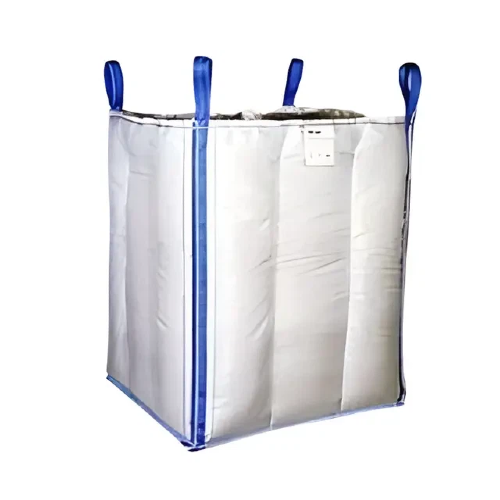
Baffle construction solves this specific logistical challenge. Baffle bags feature internal perforated panels sewn across the corners. These internal baffles force the bulk material into the corners, maintaining a rigid square shape. The square footprint optimizes pallet placement perfectly. A highly structured shape prevents dangerous leaning during warehouse stacking.
Optimizing Filling and Discharge Workflows
Your packaging must perform safely and rapidly on the factory floor. Operational bottlenecks frequently occur at the filling and discharge stations. Selecting the correct top and bottom mechanisms directly controls your loading and unloading throughput.
Filling Mechanisms (Top Construction)
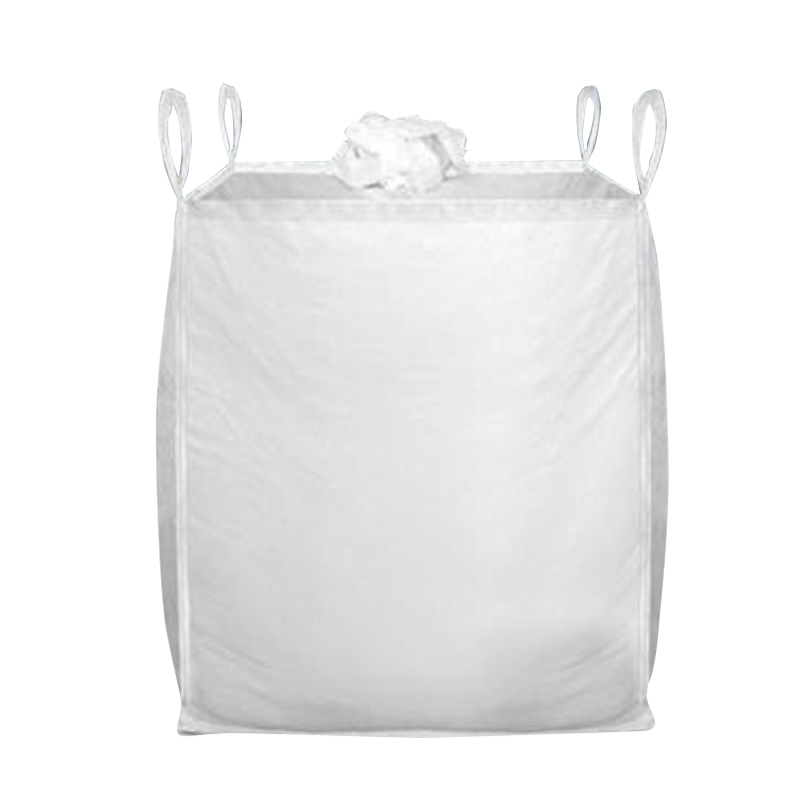
The duffel top design features a wide, extendable skirt. This skirt accommodates varied or imprecise loading equipment. Operators can achieve maximum fill widths without requiring specialized alignment tools. The duffel top works exceptionally well in open-field loading environments or older processing facilities.
The spout top connects directly to automated filling chutes. Operators slide the cylindrical spout over the facility's loading nozzle and secure it tight. This direct connection minimizes hazardous dust generation. It virtually eliminates product spillage during high-speed automated loading. Facilities utilizing gravity-fed silos rely almost exclusively on spout top designs.
Discharge Mechanisms (Bottom Construction)
Emptying bulk materials requires precision and safety. A spout bottom with a star or petal closure enables highly controlled, metered release. The operator unties the safety closure, allowing the grains to flow into processing hoppers at a manageable rate. The star closure protects the internal spout from abrasion during transport.
Flat bottom bags lack any dedicated release mechanism. Operators must slash the bottom fabric to initiate product flow. You should use flat bottom designs only for single, rapid discharge scenarios. They remain less common for high-value agricultural commodities, as slashing destroys the packaging entirely and prevents metered flow control.
Mechanism Type
Flow Control Level
Facility Compatibility
Dust Generation
Spout Top (Filling)
High
Automated Chutes
Very Low
Duffel Top (Filling)
Low
Manual / Open Loading
Moderate
Spout Bottom (Discharge)
High
Metered Hoppers
Low
Flat Bottom (Discharge)
None (Slashing required)
Bulk Dumping Grates
High
Common Mistakes in Workflow Integration
Mismatched spout diameters causing product backing up into the chute.
Ignoring static electricity buildup during rapid discharge.
Failing to secure the bottom spout properly before initiating top filling.
The Non-Negotiable Requirements of a Food Grade Bag
Protecting human consumables demands absolute material purity. Industrial-grade packaging contains recycled polymers and chemical additives unsuitable for edible crops. You must procure bags manufactured under stringent sanitary protocols. A verified Food Grade Bag eliminates the risk of cross-contamination.
Virgin Resin Mandate
Food contact packaging must utilize 100% virgin polypropylene resin. Manufacturers extrude this virgin resin specifically for sanitary applications. Recycled plastics often contain unknown chemical residues from previous industrial uses. These toxic chemicals easily migrate into porous grains during extended storage. The virgin resin mandate prevents this dangerous chemical migration entirely.
Cleanroom Manufacturing
Standard factory floors harbor dust, insects, and metallic shavings. True food-grade production occurs exclusively inside certified cleanrooms. These specialized facilities utilize positive air pressure systems. The positive pressure forces air outward, preventing external contaminants from drifting inside.
Cleanroom operators wear mandatory hairnets, gloves, and hygienic suits. They employ ultrasonic cutting machines to slice the fabric panels. Ultrasonic blades melt the fabric edges instantly, preventing microscopic threads from fraying. Final inspection includes rigorous vacuum cleaning to eliminate any stray fibers before folding and pressing.
Compliance & Certifications
You cannot determine food safety through visual inspection alone. Mandatory alignment with the British Retail Consortium (BRC) or the Global Food Safety Initiative (GFSI) standards provides verifiable proof of sanitary excellence. Auditors from these organizations inspect manufacturing facilities rigorously. If your operation requires internal moisture barriers, you must verify the polyethylene liners hold independent FDA approval for direct food contact.
How to Vet and Shortlist an FIBC Bulk Bag Supplier
Your containment strategy relies heavily on manufacturing consistency. A minor defect in fabric weaving can compromise thousands of pounds of grain. Partnering with a verified FIBC bulk bag supplier mitigates production variances. You must evaluate potential vendors using strict qualification parameters.
Traceability
Accountability serves as the foundation of agricultural supply chains. The supplier must provide comprehensive batch tracking. This tracking system should follow the materials from initial resin extrusion to final product delivery. If a defect occurs during filling, you need the ability to trace the exact production run. Traceability allows you to isolate affected batches quickly.
Testing and Quality Assurance
Never rely on undocumented promises. Look for documented, third-party lab results verifying physical endurance. The fabric should demonstrate intense UV resistance, typically surviving 1,200 hours in accelerated weathering chambers. This UV resistance prevents the bag from degrading under direct sunlight. Request physical proof of SWL compliance and drop-test survival. Drop testing simulates accidental pallet falls, ensuring the seams hold under sudden impact.
Customization and Lead Times
Off-the-shelf dimensions rarely match specialized agricultural setups perfectly. Evaluate the vendor's capacity to engineer custom spout dimensions. They must match your facility's existing infrastructure exactly. Assess their production lead times. Agricultural harvests run on strict seasonal timelines. A delay in packaging delivery can leave harvested crops exposed to the elements.
Implementation Next Step
Before committing to a high-volume contract, request a physical sample run. Order 5 to 10 bags tailored to your specified dimensions. Conduct a rigorous physical trial on your automated filling lines. Observe how the fabric behaves under tension. Ensure the bottom discharge mechanisms integrate safely over your hoppers. This small trial run prevents massive operational failures.
Conclusion
Selecting the optimal agricultural packaging demands a highly structured approach. The cheapest per-unit cost often results in higher overall operational costs due to subsequent crop spoilage or equipment bottlenecks. Investing in proper containment technology safeguards your valuable agricultural yields effectively.
Aligning fabric breathability with your specific crop prevents disastrous moisture accumulation. Optimizing the structural design ensures seamless movement through your supply chain. Committing to strict food-grade compliance protects end consumers and preserves your brand reputation. Reiterate these foundational principles as you evaluate your current storage environments. Audit your existing bags, request cleanroom verification documents from your vendors, and conduct physical spout trials to secure the most reliable path for your upcoming agricultural harvest.
FAQ
Q: What is the difference between standard FIBCs and food-grade grain bags?
A: Standard bags often contain recycled plastics and face no strict sanitary oversight. Food-grade grain bags mandate 100% virgin polypropylene resin to prevent chemical migration. They require certified cleanroom production featuring positive air pressure and ultrasonic cutting. Furthermore, they carry specific BRC or GFSI certifications verifying their safety for direct human consumable contact.
Q: Do I need an internal liner for my grain packaging?
A: This depends entirely on your grain's moisture content and the ambient storage environment. Freshly harvested, high-moisture seeds require uncoated bags without liners to vent natural heat. Kiln-dried grains stored in highly humid environments require FDA-approved internal liners to block external moisture and prevent dangerous sweating.
Q: How do baffle bags reduce agricultural shipping costs?
A: Baffle bags utilize internal corner panels to maintain a rigid, square shape when fully loaded. This shape retention prevents the cylindrical bulging common in standard circular bags. The structured footprint provides up to 30% space-saving efficiency inside standard shipping containers, allowing you to load significantly more product per truckload.
Q: Can grain FIBC bags be reused safely?
A: Reuse depends on the safety factor rating and sanitation protocols. Single-trip bags carry a 5:1 rating and must never be reused. Multi-trip bags feature a 6:1 rating and reinforced lifting loops. However, reusing food-contact packaging introduces massive cross-contamination risks unless the bags undergo professional, certified reconditioning and sanitization between uses.