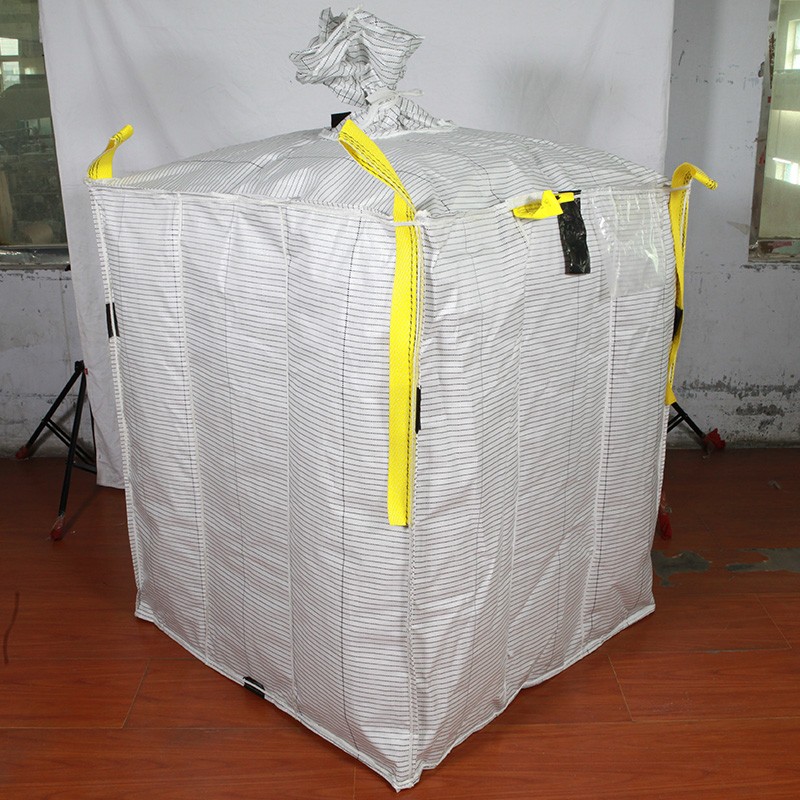
Handling combustible powders requires zero-tolerance static control. A single microscopic spark can trigger a devastating explosion. Facilities routinely deploy Conductive FIBC Bags to neutralize electrostatic discharge. These specialized containers act as a frontline defense. However, human error, mechanical degradation, or poor procurement oversight can turn these safety assets into severe hazards. We often see operators assume a bag guarantees safety simply because it has a conductive label. This complacency leads to dangerous operational outcomes.
Our purpose here is to systematically evaluate the primary points of failure when deploying these bags. You will learn to identify critical grounding mistakes, structural degradation risks, and supplier non-compliance traps. We will guide you through building foolproof handling protocols. By the end of this guide, buyers and safety managers will possess the knowledge needed to protect their facilities from invisible electrostatic threats.
Key Takeaways
The single highest risk when using Type C bags is human error resulting in an ungrounded or improperly grounded connection.
Misidentifying and deploying a Type B Anti-Static Bag in a highly explosive (Zone 1/21) environment can lead to catastrophic arc discharges.
Physical wear, tear, or snapped conductive threads compromise the bag’s grid, rendering the grounding loop useless.
Procuring uncertified bags from unverified suppliers introduces invisible risks; rigorous compliance testing (IEC standards) is non-negotiable.
Transitioning to a wholesale Type-D FIBC Bag might mitigate grounding errors but requires entirely different environmental controls.
The Primary Point of Failure: Ungrounded or Broken Connections
These bags rely entirely on a continuous electrical path to earth. The most common operational failure is shockingly simple. Operators get busy. They forget to attach grounding clips before loading or discharging material. This single oversight eliminates every safety feature engineered into the fabric. The bag cannot dissipate static energy if it lacks a physical bridge to the ground.
Without a ground connection, the container acts as an isolated capacitor. Rapidly flowing powder generates massive friction. This friction causes triboelectric charging. The fabric continuously grabs electrons from the moving material. Voltage spikes dramatically. Since the energy cannot escape, static charge builds rapidly on the fabric surface. Eventually, a grounded object approaches. A high-energy incendiary spark jumps through the air. This spark possesses enough energy to instantly ignite combustible dust clouds or solvent vapors.
We recommend specific evaluation criteria to mitigate this human error. Facilities must implement automated interlocking systems. You integrate these systems directly into your filling and discharging equipment. The equipment will not operate unless the ground monitoring system verifies a positive connection. The monitor must confirm a resistance of less than 10^7 ohms. If the clip slips or breaks, the system shuts down the material flow immediately.
Best Practice: Use bright, highly visible grounding cables.
Common Mistake: Attaching the clip to a painted metal surface. Paint insulates the connection. Always clamp onto bare metal.
Best Practice: Train operators on the physics of static buildup, not just the mechanical steps.
Bag Classification Mix-Ups: Type B vs. Type C vs. Type D
Inventory confusion creates massive business risks. Facility operators mistakenly swap bag types due to poor labeling or rushed schedules. All white industrial bags look identical to an untrained eye. However, their electrical properties vary drastically. A fatal substitution on the factory floor can easily destroy a facility.
Deploying a Type B Anti-Static Bag instead of a fully conductive container introduces severe danger. Type B models prevent propagating brush discharges. They successfully handle dry dust with a high minimum ignition energy. However, they cannot safely dissipate high levels of static charge. If you use them in environments containing flammable gases or vapors, they will fail to stop explosive arc discharges.
Substituting your inventory with a whosale Type-D FIBC Bag presents a different alternative risk. These models safely dissipate static into the atmosphere using corona discharge. They do not require a grounding cable. This eliminates the "forgotten clip" error entirely. However, they fail dramatically if their surface becomes contaminated. Water, grease, or conductive dirt coats the fabric. This contamination blocks the corona discharge process. The bag then induces hazardous sparks.
You must establish a strict decision framework to prevent mix-ups. Implement aggressive visual coding. Use distinctly colored tags or entirely different fabric colors for different classifications. Separate your storage protocols physically. Do not store different electrical classifications on the same warehouse rack.
Bag Classification
Grounding Required?
Safe in Flammable Vapors?
Primary Operational Risk
Type B
No
No
Deploying in hazardous vapor zones.
Type C
Yes (Mandatory)
Yes
Operators forgetting to attach the ground clip.
Type D
No
Yes
Surface contamination blocking discharge.
Mechanical Degradation and Grid Damage
Conductive threads form an intricate grid throughout the bag's fabric. These interwoven threads capture static electricity. They channel this energy safely toward the grounding points. Physical trauma disrupts this protective system entirely. Forklift tines frequently bump or snag the side panels. Rough pallets chafe the bottom fabric. If these threads snap, the container loses its continuous electrical continuity.
The bag might look structurally intact. It will still hold heavy powder perfectly. However, a severed grid creates a localized dead zone. This isolated patch of fabric continues to accumulate static charge. The grounding clips cannot reach this trapped energy. A spark becomes inevitable, even if operators attach the clamps perfectly.
Facilities often fall into the washing and re-use trap. Managers want to extend lifespan to optimize budgets. They send bags out for industrial laundering. Washing aggressively degrades the delicate conductive coatings. Strong detergents break the carbon threads. You cannot see this microscopic damage. An isolated section will then accumulate a dangerous static charge.
We offer strict actionable advice here. Treat these specialized containers as single-use consumables. Never wash them unless absolutely necessary. If you must reuse them, you must invest in dedicated, on-site electrostatic testing equipment. Operators must verify electrical continuity across the entire grid before every subsequent fill. Visual inspections are practically useless for identifying broken micro-threads.
Loading and Discharging Operational Errors
Process vulnerabilities peak during the movement of materials. Static generation occurs primarily during the rapid flow of powder into or out of the container. Gravity forces particles to rub against each other aggressively. You must manage this flow carefully to prevent overwhelming the dissipation grid.
Using unsupported inner liners represents a massive operational error. Facilities often use standard, non-conductive inner liners for moisture protection. Industry experts categorize these standard plastics as Type L1. Inserting an L1 liner inside a conductive container nullifies all safety mechanisms. The standard plastic insulates the powder. The conductive grid cannot pull static charge through the thick plastic barrier. The charge stays trapped inside the liner. Only fully conductive or strictly specified anti-static liners should ever be paired with these specialized bags.
Gravity and uncontrolled material flow introduce extreme risks. Discharging powder too quickly creates turbulent air displacement. This forces fine particles outward. A concentrated dust cloud forms immediately around the discharge spout. This maximizes the risk of ignition. If a localized grid failure causes a micro-spark, the concentrated dust provides perfect fuel for an explosion.
Implement these standardized loading and discharging steps to maintain safety:
Inspect the outer fabric visually for obvious rips, tears, or heavy abrasions.
Attach the grounding clamp securely to a designated, unpainted earth point.
Verify electrical continuity using an automated interlock monitor.
Confirm the inner liner matches the exact electrical classification required.
Initiate powder flow at a restricted, deliberately slow rate to minimize friction.
Engage active dust extraction hoods during the entire discharge phase to remove airborne fuel.
The risk of electrostatic failure begins long before the bags enter your facility. Supplier evaluation dimensions matter immensely. Buying non-compliant inventory based purely on budget constraints represents a critical compliance failure. You cannot inspect safety features visually. You rely entirely on the manufacturer's integrity and quality control.
Do not accept vague, self-certified safety claims from unknown vendors. Many overseas manufacturers weave fake black threads into standard fabric. These threads look conductive but carry zero electrical current. Demand verifiable promises. Require actual third-party testing certificates. The supplier must prove absolute compliance with IEC 61340-4-4 standards for electrostatic safety. This specific standard ensures the container maintains a safe resistance path under harsh industrial conditions.
Use strict logic when shortlisting vendors for a whosale Type-C FIBC Bag contract. Audit their manufacturing process directly. Ensure they utilize high-quality conductive yarns. A reliable manufacturer will test electrical continuity across all grounding tabs prior to shipment. They check the resistance from the main body directly to the lifting loops.
Take immediate next-step actions before signing purchase orders. Request sample audit reports. Ask for trace testing documentation tied to specific production batches. A trustworthy supplier provides these documents willingly. If a vendor hesitates to share their IEC compliance data, terminate the negotiation immediately. Protecting your facility starts at the procurement desk.
Conclusion
Conductive bulk bags remain highly effective tools for managing hazardous powders. However, their safety is purely conditional. They require absolute operational discipline on the factory floor. They demand pristine structural integrity to maintain their electrical grid. Furthermore, they necessitate rigorous supplier validation to ensure authentic compliance.
We urge you to audit your current bulk handling procedures today. Verify your ground monitoring equipment functions correctly. Review your current vendor’s compliance testing documentation to ensure genuine IEC certification. Train your operators to understand the physics of static electricity. By enforcing strict handling protocols and validating procurement channels, you ensure your facility stays fully protected against devastating electrostatic hazards.
FAQ
Q: What happens if I forget to ground a Conductive FIBC Bag?
A: The bag accumulates massive electrostatic charge during filling or emptying operations. This trapped energy creates a high risk of an incendiary spark. This spark can easily ignite combustible dust or surrounding flammable gases. Grounding remains an absolute necessity.
Q: Can I use a Type B Anti-Static Bag instead of a Type C bag?
A: You can only do this in environments where no flammable gases or vapors are present. Additionally, the dust minimum ignition energy must be greater than 3mJ. They are not direct substitutes. Type B bags cannot dissipate high-level charges.
Q: Are Type C Conductive Bags reusable?
A: Generally, they are considered single-trip containers. You should only reuse them if they are explicitly designed for multi-use (SF 6:1 rating). Furthermore, you must rigorously test them electrically for continuity before every single reuse.
Q: How do I know my wholesale Type-C FIBC Bag meets safety standards?
A: Always look for verifiable third-party certifications, specifically the IEC 61340-4-4 standard. You must also verify the manufacturer conducts batch-level electrical continuity testing before shipping the products to your facility.