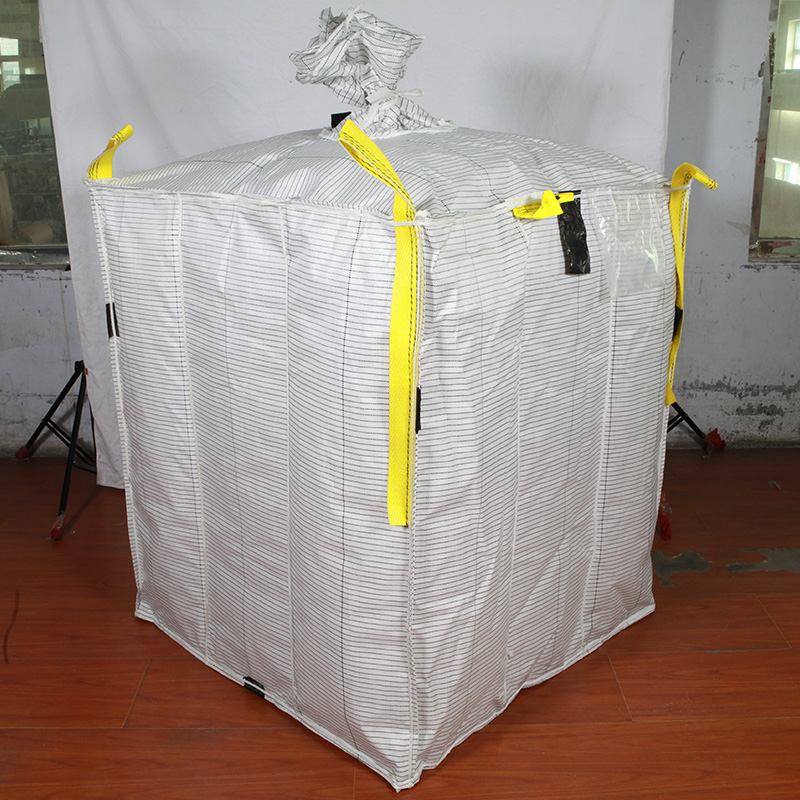
The rapid scaling of EV and energy storage manufacturing exposes a severe supply chain vulnerability. Facilities struggle with the safe, compliant, and contamination-free transport of highly reactive precursor materials like lithium carbonate, cobalt, and nickel powders. Standard bulk packaging introduces massive risks to your operations. These include static discharge combustion, moisture ingress causing material degradation, and heavy regulatory penalties. Procurement and logistics teams face a daily challenge. You must balance stringent safety requirements with supply chain efficiency. To mitigate these risks, buyers must move beyond standard bulk bags and specify highly engineered, certified packaging. This guide outlines the technical specifications, compliance standards, and supplier evaluation criteria necessary to safely transport battery-grade materials. You will learn exactly how to configure FIBC bags for lithium battery materials to protect your facility and product yield.
Static Control is Non-Negotiable: Transporting fine battery powders generates static electricity; buyers must specify either Type C (grounded) or Type D (dissipative) bags based on facility infrastructure, strictly avoiding standard Type A and B bags.
Mandatory UN Certification: Lithium battery precursors often fall under dangerous goods classifications, requiring rigorously tested UN certified bulk bags to meet international shipping regulations.
Moisture Barriers Protect Yield: High-barrier liners (such as aluminum foil or EVOH) are critical to controlling the Moisture Vapor Transmission Rate (MVTR) and preventing chemical degradation.
Supplier Verification is Critical: Sourcing must prioritize a hazardous material FIBC supplier with verifiable cleanroom manufacturing, independent testing data, and a proven track record in chemical packaging.
The Unique Hazards of Transporting Lithium Battery Precursors
Static Electricity and Minimum Ignition Energy (MIE)
Filling and discharging fine chemical powders generates intense friction. When you pump lithium carbonate through a pneumatic conveying system into a bulk bag, the particles rub against the pipe walls and each other. This physical movement strips electrons from the material, building a massive static charge across the fabric surface of the bag. Battery materials possess extremely low Minimum Ignition Energy (MIE) thresholds. Often, their MIE sits below 3 millijoules. A tiny static spark, one so small a human operator cannot even feel it, will ignite suspended dust clouds instantly. Uncontrolled environments turn routine powder transfers into severe combustion risks. Facility managers must control static accumulation at every single transfer point. You cannot rely on standard packaging to manage these electrical charges. Without a clear path to ground or dissipate, this stored energy arcs to the nearest conductive surface, such as a forklift mast or a worker's tool. This arc provides the exact ignition source needed for a catastrophic dust explosion that can destroy a silo or an entire processing wing.
Moisture Sensitivity and Contamination Risks
Materials like lithium hydroxide and lithium carbonate are highly hygroscopic. They pull water straight out of the surrounding air during transit and storage. If your warehouse humidity spikes and your packaging breathes, the powder absorbs that moisture rapidly. This exposure causes immediate chemical degradation, forming hydrates that destroy the battery-grade purity required for cell manufacturing. Clumped powder will not feed properly through rotary valves or dosing equipment, ruining the batch stoichiometry for cathode production. Material degradation leads to massive financial losses through rejected batches. Transport packaging must also prevent foreign particulate contamination completely. Micro-metal shavings from substandard manufacturing environments ruin battery performance. If a stray piece of carbon steel from a sewing needle gets into the powder, it ends up in the finished battery cell. That microscopic impurity causes dendrite formation, leading to internal shorts and thermal runaway in electric vehicles. You must protect these precursor powders from both atmospheric moisture and physical contaminants.
Regulatory Scrutiny and Dangerous Goods Compliance
Moving hazardous materials across international borders involves strict legal realities. Authorities enforce IMDG, ADR, and DOT regulations rigorously at every port and checkpoint. Regulatory bodies classify many battery precursors as Class 9 hazardous materials. This classification dictates specific packaging performance requirements that you cannot bypass. Non-compliant packaging triggers immediate customs delays, heavy fines, and shipment quarantines. Port inspectors will reject shipping containers that lack proper dangerous goods documentation or display incorrect markings. When a shipment gets flagged, you pay daily demurrage fees and often have to hire specialized hazmat teams to repackage the material on-site. Logistics teams must ensure every bulk bag meets global standards before it leaves the loading dock. Compliance protects your supply chain timeline and shields your corporate liability from international shipping penalties.
Evaluating Static Control: Why Standard Bags Fail
The Danger of Type A and Type B FIBCs
Standard Type A bags offer absolutely zero static protection. Manufacturers weave them from plain polypropylene without any conductive properties. They act as insulators, trapping the static charge generated during filling. They are entirely unsuitable for low-MIE battery powders. Type B bags possess a slightly lower breakdown voltage to prevent propagating brush discharges. However, they cannot dissipate high static charges safely. Using Type A or Type B bags for reactive precursors is extremely dangerous. Operators often mistakenly believe Type B bags offer sufficient protection because of their modified fabric. This dangerous assumption leads to severe facility accidents. If you put a low-MIE powder in a Type B bag, you are essentially building a static bomb on your production floor. You must eliminate Type A and Type B bags from your battery material supply chain entirely.
Type C FIBC Bags (Conductive)
Manufacturers construct Type C FIBC bags with interconnected conductive carbon or silver threads. These threads form a continuous grid pattern throughout the woven fabric. They carry static charges to a designated ground point safely. They are highly effective for low-MIE environments when used correctly. However, they introduce severe implementation risks to your operations. Human operators must physically connect a grounding cable with an alligator clip to the bag's earth tab before use. If an operator forgets to ground the bag, or if the clip is dirty and fails to make a solid connection, the explosion risk increases exponentially. The ungrounded conductive threads actually act as a massive capacitor. This grid stores the static charge until it arcs violently to the nearest ground. You must enforce strict, verifiable grounding protocols when using conductive FIBC bags.
Type D FIBC Bags (Static Dissipative)
Type D FIBC bags utilize specialized dissipative fabric technologies, such as CROHMIQ. This material safely dissipates static charges directly into the atmosphere via corona discharge. It does not require a physical ground connection to function. This mechanism eliminates human error in grounding protocols entirely. It provides a passive safety system for high-speed filling operations where operators might rush and skip safety steps. However, it requires strict environmental controls within your facility. The bag surface cannot be contaminated with conductive materials like water, grease, or heavy dirt. Surface contamination disrupts the corona discharge process and traps static energy within the fabric. You must maintain clean, dry handling environments to maximize their effectiveness.
Decision Framework: Matching Bag Type to Facility Infrastructure
Buyers must evaluate their specific facility infrastructure before purchasing. Assess your existing grounding systems, operator training levels, and atmospheric conditions. You must match the bag type to your operational reality to ensure safety.
Facility Infrastructure Matching Matrix
Bag Type
Grounding Required
Human Error Risk
Ideal Environment
Type C (Conductive)
Yes - Mandatory physical connection
High (Operator must connect ground clip)
Facilities with strict, automated grounding interlocks
International shipping regulations demand rigorous testing for hazardous materials. Independent laboratories subject UN certified bulk bags to severe physical stress tests before issuing a certificate. These include drop tests from specific heights, tear tests to ensure punctures do not propagate, stacking tests holding massive weight for 28 days, and topple tests. The drop test simulates a catastrophic fall from a forklift mast during loading. Lithium battery precursors often fall under Class 9 hazardous materials. You must map these materials to specific UN Packaging Groups. Group II covers medium danger materials requiring robust containment. Group III covers minor danger materials with slightly lower thresholds. Your packaging must display the correct UN markings clearly on the exterior shell. Missing, smeared, or incorrect markings guarantee customs rejections at international borders.
Outer Shell Durability and Sift-Proof Seams
The outer woven polypropylene shell requires exceptional physical toughness. High UV resistance prevents fabric degradation during outdoor staging and transport across oceans. This durability prevents punctures and tears during rough transit handling by stevedores and warehouse staff. Ultra-fine powders like lithium carbonate leak easily through standard stitch holes. The heavy-duty sewing needles create microscopic gaps in the woven fabric during manufacturing. You must specify sift-proof seams with filler cords for these materials. These dust-proof seams block fine particles from escaping the bag structure. The manufacturer sews a thick, compressible yarn directly into the seam line. This yarn expands to fill the needle holes completely. It ensures your hazardous powders remain safely contained inside the bag, preventing toxic dust clouds in your shipping containers.
Engineered Liners for MVTR Control
Internal liners control the Moisture Vapor Transmission Rate (MVTR) directly. Standard polyethylene liners offer only basic protection against humidity and are insufficient for battery precursors. EVOH co-extruded liners provide superior oxygen barriers for sensitive chemical compounds. Aluminum foil laminates deliver the ultimate moisture and oxygen defense, completely blocking atmospheric ingress. You must match the liner material to your specific lithium compound's sensitivity. Proper MVTR control prevents chemical degradation during long ocean transits through humid climates. The liner must be properly attached to the outer shell. Glued or tabbed liners prevent the plastic from discharging with the powder during emptying. A loose liner can fall into your hopper, jam your processing equipment, and halt production lines. Specify form-fit liners to maximize internal volume and improve stacking stability.
Liner Material Performance Comparison
Liner Material
Moisture Barrier (MVTR)
Oxygen Barrier
Best Application
Standard Polyethylene (PE)
Low
Low
Non-sensitive bulk chemicals
EVOH Co-extrusion
Medium
High
Oxygen-sensitive precursors
Aluminum Foil Laminate
Highest
Highest
Highly hygroscopic lithium compounds
Safe Working Load (SWL) and Safety Factor (SF)
Battery powders are exceptionally heavy and dense materials. You must define strict structural requirements for chemical FIBC bags to handle this mass. The Safe Working Load (SWL) dictates the maximum weight the bag can hold safely, typically ranging from 1000kg to 2000kg for these applications. A 5:1 Safety Factor (SF) suits single-trip, standard use applications where cross-contamination risks prevent bag reuse. A 6:1 SF provides multi-trip, heavy-duty performance for closed-loop systems. Evaluate your logistics model to select the appropriate structural rating. Overloading a bag beyond its SWL invites catastrophic structural failure during lifting. You must engineer the lifting loops to support the entire dynamic load. This ensures safe handling during rapid crane or forklift movements, where bouncing multiplies the effective weight of the powder.
Supply Chain Efficiency and Handling
Optimizing Lifting and Discharge Mechanisms
Specifying the correct lifting loops reduces handling time significantly on the warehouse floor. Cross-corner loops keep the bag mouth wide open and rigid for easy forklift access. This design allows a single operator to load the bag efficiently without needing a second worker to hold the loops open. Stevedore straps offer excellent stability for dense, heavy powders during crane loading at ports. Discharge spouts require careful configuration to minimize dust exposure. Petal closures provide secure, controlled release during emptying operations, preventing sudden powder avalanches. Iris valves allow operators to choke the flow of fine powders instantly, stopping the discharge mid-bag if necessary. These engineered features protect workers and streamline processing operations. A poorly designed discharge spout creates massive dust clouds in your facility, wasting valuable material and creating severe inhalation hazards for your staff.
Maximizing Storage and Transport Density
Baffle bags utilize internal fabric panels sewn across the corners to maintain a rigid square shape. This square footprint maximizes space inside shipping containers and warehouse racking systems. Standard cylindrical bags bulge outward when filled with dense powders. This bulging wastes valuable floor space and complicates stacking procedures, often causing bags to lean dangerously. Baffle designs keep the side walls rigid and straight under heavy loads. This allows you to load more product into a standard 40-foot high-cube shipping container. Efficient space utilization streamlines your entire logistics network and cuts freight costs. It reduces the number of shipments required to move your materials globally. You must evaluate your storage racks to determine the optimal bag dimensions. Proper sizing ensures stable stacking and prevents dangerous warehouse collapses.
Implementation Risks: Vetting a Hazardous Material FIBC Supplier
Auditing Manufacturing Standards for Chemical Purity
Battery-grade materials demand absolute chemical purity from their packaging. You must audit manufacturing standards rigorously before signing contracts. Require cleanroom manufacturing environments, specifically ISO Class 6 or 7. This prevents cross-contamination from foreign particulates during the sewing and folding process. Facilities must maintain positive air pressure and enforce strict gowning procedures for all workers. Demand proof of BRCGS or ISO 22000 hygiene certifications. Battery materials require food-grade or pharma-grade facility hygiene levels. This extreme cleanliness prevents micro-metal contamination from ruining your precursor materials. Standard industrial bag facilities are too dirty for battery applications. Dust, loose threads, and machine oil will contaminate your high-value powders. You must verify the supplier uses ultrasonic cutting tools. These tools melt and seal the fabric edges, preventing loose polypropylene threads from falling into the bag.
Verifying Testing and Documentation
Never accept internal testing data at face value from any vendor. Demand independent, third-party laboratory certificates for all safety claims. Verify UN ratings and electrostatic breakdown voltage tests through accredited labs. Watch for critical red flags when evaluating a hazardous material FIBC supplier. Counterfeit Type D fabrics pose massive safety risks to your facility, as they look identical to genuine CROHMIQ but fail to dissipate static. Unverified woven PP strength leads to catastrophic bag failures during transit. Expired UN certificates will cause immediate customs rejections at the port, stranding your materials. You must establish a robust quality assurance protocol for incoming shipments. Test random samples from every batch for surface resistivity and seam strength to ensure consistent performance. A reliable supplier welcomes this scrutiny and provides transparent documentation.
Conclusion
Audit your facility's grounding capabilities immediately to choose between Type C and Type D bags.
Request material safety data sheets (MSDS) for all specific powders to determine MIE and MVTR requirements.
Order sample bags for pilot testing and physical validation on your filling lines.
Establish incoming quality assurance protocols to test random bag samples for surface resistivity.
Verify independent lab certificates for all UN ratings and static dissipation claims before issuing purchase orders.
FAQ
Q: Why are Type A and Type B bags unsafe for lithium battery materials?
A: Type A bags offer zero static protection, while Type B bags cannot dissipate high static charges. Lithium battery materials have very low minimum ignition energies. Using standard bags creates a severe risk of static-induced explosions during filling and discharging.
Q: What is the difference between Type C and Type D FIBC bags for chemical powders?
A: Type C bags use conductive threads and require a physical ground connection to dissipate static safely. Type D bags use specialized dissipative fabric that releases static into the atmosphere without needing a ground, eliminating human error in grounding protocols.
Q: Are UN certified bulk bags legally required for lithium battery materials?
A: Yes. Most lithium battery precursors classify as dangerous goods under international shipping regulations. Authorities require rigorously tested UN certified packaging to transport these hazardous materials legally across borders and through ports.
Q: What type of liner is best for moisture-sensitive battery precursors?
A: Aluminum foil laminates provide the best protection for highly moisture-sensitive materials. They offer the lowest Moisture Vapor Transmission Rate (MVTR). EVOH liners also provide excellent oxygen and moisture barriers compared to standard polyethylene.
Q: Why do chemical FIBC bags require sift-proof seams?
A: Battery precursors like lithium carbonate are ultra-fine powders. Standard stitching leaves tiny holes where these fine particles can escape. Sift-proof seams use filler cords to block these holes, preventing hazardous dust leaks during transit.
Q: How do you properly ground a Type C FIBC bag?
A: Operators must connect a grounding cable from the bag's designated grounding tabs to a verified facility earth ground. This connection must remain secure throughout the entire filling or discharging process to prevent static buildup.