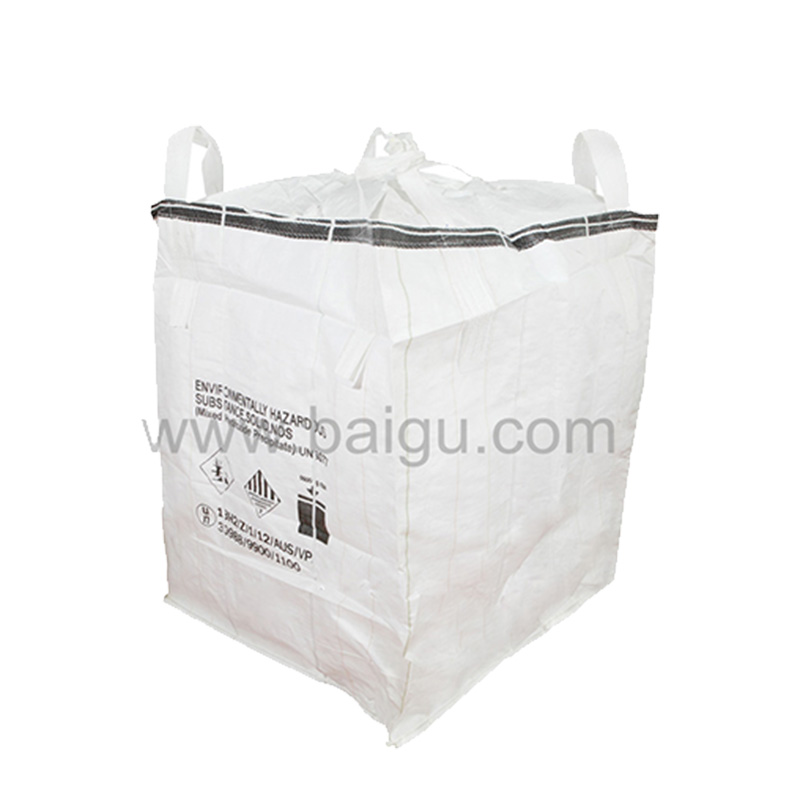
Transporting hazardous materials carries severe financial, legal, and safety liabilities. A single packaging failure can result in catastrophic spills, regulatory embargoes, and massive fines. Procurement and logistics teams struggle to balance strict international transport regulations, including DOT, IMDG, and ADR, with packaging budgets. They often risk non-compliance by under-specifying or waste resources by over-specifying their bulk containers. Determining exactly when your supply chain requires UN certified bulk bags requires a systematic evaluation of your product's hazard class, transport mode, and handling environment. This guide provides a technical framework for evaluating, selecting, and implementing the correct compliant packaging.
UN certification is legally mandatory for transporting materials classified as hazardous by the United Nations, dictated by the product's specific UN number and Packing Group (II or III).
Standard FIBCs operate on a 5:1 safety factor, whereas UN FIBC bags require a 6:1 safety factor and must pass rigorous, independent physical testing (drop, tear, stacking, and vibration).
Selecting the right bag involves matching the UN packaging code (e.g., 13H3 for woven plastics with liners) to the physical state and chemical properties of the payload.
Supplier verification is critical; utilizing fraudulent or expired UN certificates transfers full legal liability back to the shipper in the event of an incident.
1. Defining the Baseline: Standard FIBCs vs. UN Certified Bulk Bags
Shippers frequently confuse heavy-duty standard bags with legally compliant packaging. This creates massive compliance gaps on the warehouse floor. Standard flexible intermediate bulk containers handle agricultural products, sand, or gravel effectively. They lack the engineered resilience required for dangerous goods. Standard bags undergo testing for general industrial use. UN bags feature reinforced construction, specific stitching patterns, heavier fabric weights, and strict quality control tolerances.
Let us examine the fabric construction. Standard bags might use a 150 GSM (grams per square meter) woven polypropylene. A certified bag for hazardous materials often requires 200 GSM or higher to survive impact testing. The sewing thread is thicker and possesses higher tensile strength. The lifting loops extend further down the body of the bag to distribute stress evenly across the side panels during dynamic lifting operations.
The core structural difference lies in the safety factor (SF) requirements. Standard single-trip bags operate on a 5:1 safety factor. This means a bag rated for 1,000 kg must survive a 5,000 kg test load in a laboratory setting without breaking. Regulatory bodies mandate a shift to a 6:1 safety factor for UN certified packaging. A 1,000 kg rated bag must withstand 6,000 kg of force. This ensures a much higher operational safety margin during transit. Unlike standard 8:1 multi-trip bags, these specialized containers are strictly designed and certified for single-trip transport of dangerous goods. You fill them once, ship them, and discharge them. You cannot reuse them for hazardous transport.
Understanding the UN marking system printed on the bag is essential. A typical code looks like 13H3/Y/11.23/USA/M1234/10000/1000. This string communicates operational limits directly to handlers and inspectors.
Bag type code: Designates the material and construction. For example, 13H3 indicates woven plastic with a liner.
Packing group allowance: "Y" indicates approval for Packing Groups II and III. "Z" is restricted to Packing Group III only.
Manufacturing date: The month and year of production.
Authorization details: The authorizing country and the specific manufacturer code.
Stacking test load: The maximum weight in kilograms the bag can support when stacked in a warehouse or transport vehicle.
Maximum gross mass: The maximum approved weight of the bag and its contents combined.
2. Regulatory Triggers: When Are Hazardous Goods Bulk Bags Mandatory?
Determining the necessity of specialized packaging begins with the Safety Data Sheet (SDS). Logistics managers must consult Section 14 of the SDS to locate the UN Number and Proper Shipping Name. The United Nations categorizes dangerous goods into specific hazard classes. Many of these require certified flexible containers for dry bulk transport.
Here is the standard process for identifying packaging requirements:
Obtain the current, updated SDS from the chemical manufacturer.
Navigate directly to Section 14, which covers Transport Information.
Identify the four-digit UN Number assigned to the material.
Note the Hazard Class and the assigned Packing Group.
Cross-reference these details with the relevant transport regulations to confirm flexible bulk containers are an authorized packaging method.
The specific UN Hazard Classes approved for transport in these containers include:
Class 4.1: Flammable solids, self-reactive substances, and solid desensitized explosives.
Class 4.2: Substances liable to spontaneous combustion.
Class 4.3: Substances which, in contact with water, emit flammable gases.
Class 5.1: Oxidizing substances.
Class 5.2: Organic peroxides.
Class 6.1: Toxic substances.
Class 8: Corrosive substances.
Class 9: Miscellaneous dangerous substances and articles.
Beyond the hazard class, the Packing Group (PG) dictates the danger level and the corresponding bag testing standards. Materials in Packing Group I pose great danger. Flexible containers are generally not permitted for PG I materials; you must use alternative rigid packaging like steel drums or rigid IBCs. Packing Group II materials represent medium danger and require bags tested to "Y" standards. Packing Group III materials pose minor danger and require bags tested to "Z" standards. A "Y" rated bag can legally carry PG II and PG III materials.
Specific industrial applications demand strict adherence to these classifications. When sourcing chemical transport bags for corrosive or toxic dry chemicals, material compatibility is your primary concern. The polypropylene weave must resist chemical degradation from the payload. Similarly, ammonium nitrate packaging requires specific regulatory lenses. Ammonium nitrate is an oxidizing agent (Class 5.1). It requires strict moisture control to prevent caking and chemical degradation. The packaging must also mitigate explosion risks by preventing contamination from combustible materials. Contaminated soil and site-remediation projects rely heavily on hazardous goods bulk bags for the safe disposal of heavy metal contamination and hazardous waste.
Navigating jurisdictional nuances is another step. Supply chain managers must map the alignment between domestic DOT regulations (49 CFR) in the United States and international frameworks. The IMDG Code governs maritime transport, RID covers rail, and ADR covers road transport in Europe. Friction points often arise when domestic exemptions do not apply to international shipping lanes. A shipment might leave a US facility legally under a specific DOT exemption, only to be impounded at a European port because it fails IMDG requirements.
3. Evaluating Solution Categories: Selecting the Right UN FIBC Bags
Matching bag specifications to product behavior, particle size, bulk density, and environmental risks ensures safe transit. The selection process relies heavily on understanding UN designator codes. These codes classify the construction and barrier properties of the container.
The primary designator codes include:
13H1: Woven plastic, uncoated, without a liner. Suitable for larger granules or pellets that do not generate dust.
13H2: Woven plastic, coated, without a liner. The coating provides basic dust control and prevents moisture from wicking into the fabric.
13H3: Woven plastic, uncoated, with a liner. Critical for fine powders requiring moisture protection and strict containment.
13H4: Woven plastic, coated, with a liner. Offers maximum sift-proofing and environmental barrier protection.
For fine powders, sift-proofing and seam construction are non-negotiable. Standard sewing leaves needle holes in the fabric. When a bag full of fine powder vibrates in a truck trailer, those particles act like a fluid and escape through the holes. Sift-resistant sewing methods solve this. Manufacturers use single, double, or triple filler cords made from felt or polypropene yarn. The sewing machine stitches through these cords, plugging the needle holes completely. Without these reinforcements, microscopic particles leak, creating severe inhalation or combustion hazards in the transport vehicle.
Static control requirements dictate the use of specialized fabrics. When handling combustible dusts or operating in explosive atmospheres, Type C (conductive) or Type D (dissipative) UN FIBC bags are required. Type C bags feature a grid of conductive threads woven into the polypropylene. Operators must physically ground these bags during filling and discharging to dissipate static electricity. Type D bags use special dissipative yarns that safely release static charge into the atmosphere without requiring a ground connection. Both must comply with the IEC 61340-4-4 electrostatic standard to prevent sparks that could ignite the payload or surrounding environment.
Liner selection further refines the packaging solution. Form-fit liners match the exact internal dimensions of the bag, preventing folds and creases that trap material during discharge. Tube liners are basic cylindrical films sewn or glued into the bag. Baffled liners maintain a square shape, optimizing shipping container space. You must assess the trade-offs between these options based on your material's need for oxygen exclusion, moisture resistance, and structural stability.
4. The Testing and Certification Framework
Self-certification by the manufacturer is invalid for hazardous materials packaging. Authoritative compliance requires testing conducted by independent, ISO/IEC 17025 accredited third-party laboratories. This ensures unbiased verification of the container's structural integrity under extreme stress.
The performance testing protocol includes several destructive evaluations. The lab fills the bag with a non-hazardous material that mimics the physical properties and bulk density of the intended payload.
Top Lift Test: The bag must sustain six times its maximum gross mass for five minutes without failure. Hydraulic rigs pull the lifting loops upward while the bag is anchored.
Drop Test: A fully loaded bag is dropped from specific heights (1.2m for PG II, 0.8m for PG III) onto a rigid, non-resilient flat surface. It must survive without rupture or leakage. The drop targets the weakest part of the bag, usually the base or a bottom seam.
Topple Test: The bag is tipped over from a height (1.2m for PG II, 0.8m for PG III) to verify seam and top closure integrity upon impact.
Righting Test: A knocked-over bag is lifted by one or two loops to simulate emergency recovery operations. The loops and fabric must not tear.
Tear Test: A technician initiates a 100mm cut at a 45-degree angle to the principal direction of the fabric using a knife. A load is applied to ensure the tear does not propagate more than 25%. The woven tapes must arrest the tear.
Stacking Test: A top load equivalent to 1.8 times the maximum permitted stacked weight is applied for 24 hours to simulate warehouse conditions. The bag cannot deform enough to cause instability.
Vibration Test: Under US DOT (49 CFR § 178.819) and international standards, bags undergo a one-hour vibration test on a mechanical shaker table. This simulates road transit. The bag must not leak contents or suffer structural damage.
UN certificates apply strictly to the exact design type tested. Any modification voids the certificate immediately. If you change the bag dimensions by two inches, increase the fabric weight, alter the loop style, or switch to a thicker liner, you must completely re-test the new design. Standard re-certification schedules typically mandate new testing every 12 to 24 months to maintain compliance validity.
5. Cost-to-Value Trade-offs and Implementation Risks
Procuring certified packaging involves analyzing the overall value against the severe risks of non-compliance. These specialized containers carry a premium over standard industrial bags. This premium stems from heavy-duty material inputs, specialized sewing operations, rigorous QA/QC processes, and administrative testing fees. However, the cost of non-compliance far outweighs this premium. Rejected shipments, severe DOT fines, environmental remediation costs, and insurance invalidation present massive financial liabilities for shippers who attempt to cut corners.
Mitigating implementation risks requires strict operational oversight. Counterfeit and expired certificates are a persistent threat in the global supply chain. Procurement teams must request, read, and verify unredacted third-party lab reports directly from the testing facility. Do not accept a simple summary document from a broker. Look for the lab's accreditation stamp, the exact dimensions tested, and the expiration date.
UV degradation also poses a structural risk. Polypropylene degrades under direct sunlight. The UV rays break down the polymer chains, drastically reducing the tensile strength of the fabric. Proper indoor storage protocols for unused bags are mandatory. Keep them in a dry, covered warehouse away from direct sunlight and extreme heat to maintain the certified safety factors.
Supply chain disruptions can be mitigated by understanding lead time volatility. These containers are rarely stocked as off-the-shelf commodities because the UN certificate is tied to a specific design for a specific payload. Forecasting custom manufacturing and testing lead times ensures continuous operational flow. Expect lead times extending 12 to 16 weeks for custom imports, factoring in the time required for third-party lab testing.
Handling protocols must be strictly enforced on the warehouse floor. Improper filling, discharging, or forklift handling can instantly void the certification and compromise safety. Forklift operators must use all four lift loops simultaneously. Lifting a four-loop bag by only two loops alters the stress distribution and violates the testing parameters. Operators must ensure forklift tines are smooth and spaced correctly to avoid cutting the loops. Never exceed the rated safe working load, and strictly adhere to safe warehouse stacking limits.
Conclusion
Audit your current Safety Data Sheets (SDS) to confirm the exact Hazard Class and Packing Group for all transported materials.
Cross-reference your existing packaging specifications against the required UN codes mandated by the SDS.
Request a formal packaging compliance audit from a certified manufacturer to identify any regulatory gaps in your current supply chain.
Establish an internal verification process for reviewing unredacted third-party lab certificates before issuing purchase orders.
FAQ
Q: What does the "Y" mean in a UN packaging code?
A: The "Y" indicates that the bag has been tested and approved for transporting materials classified under Packing Group II (medium danger) and Packing Group III (minor danger).
Q: Can I reuse a UN certified bulk bag for hazardous materials?
A: No. UN certified flexible containers are legally restricted to single-trip use only when transporting dangerous goods. Reusing them violates transport regulations and compromises safety.
Q: How long is a UN test certificate valid?
A: Certificates are typically valid for 12 to 24 months, depending on the regulatory body and testing facility. After this period, the specific bag design must undergo re-testing to maintain certification.
Q: Do I need a liner for my hazardous goods bulk bag?
A: Liners are required if you are transporting fine powders that could sift through woven fabric, or if the material requires a strict moisture or oxygen barrier. The UN code 13H3 or 13H4 indicates a liner is included.
Q: What happens if I change the lifting loop design on a certified bag?
A: Any alteration to the bag's dimensions, fabric weight, loop design, or liner thickness instantly voids the existing UN certificate. The modified design must be completely re-tested by an independent lab.
Q: Are standard 5:1 safety factor bags allowed for hazardous waste?
A: No. Hazardous waste transport requires a minimum 6:1 safety factor and specific UN certification based on the waste's hazard class and packing group. Standard 5:1 bags are strictly for non-hazardous industrial use.