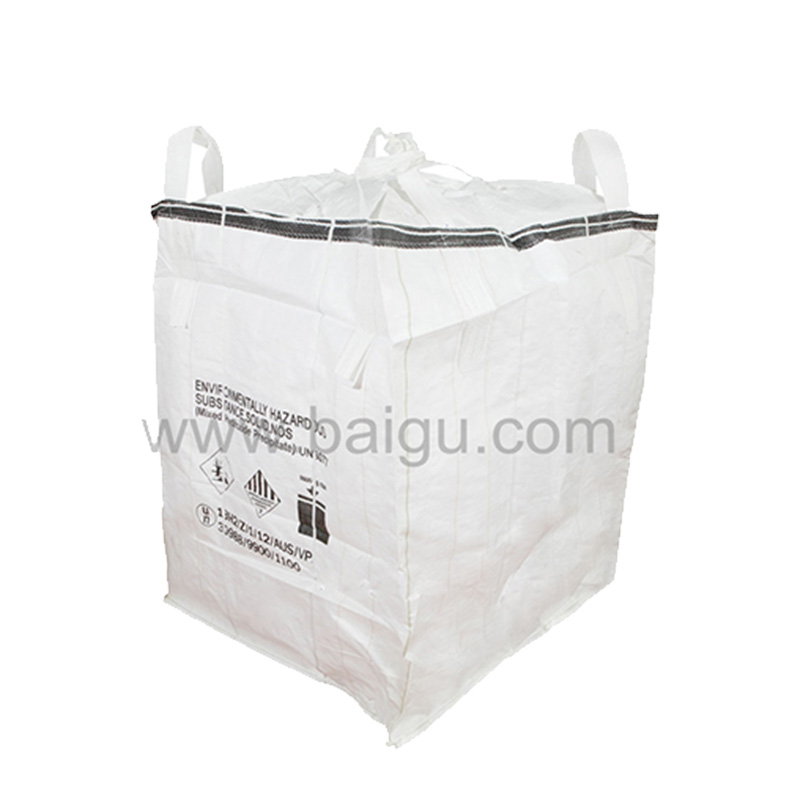
Transporting hazardous materials in flexible intermediate bulk containers carries severe legal, financial, and environmental liabilities. A single containment failure can result in catastrophic supply chain disruptions, environmental remediation costs, and severe regulatory fines. Procurement and safety teams often treat UN certification as a simple binary checkbox. However, misunderstanding the specific limitations, testing parameters, and validity of a jumbo bag certificate exposes companies to hidden compliance risks, transport rejections, and counterfeit products. This guide breaks down exactly what a UN certificate validates, how to decode complex regulatory markings, the testing protocols required under international dangerous goods codes, and the technical criteria required to evaluate and select a compliant partner for hazardous goods.
Key Takeaways
A valid jumbo bag certificate guarantees the packaging has passed up to six rigorous physical stress tests, but its validity is strictly limited to specific hazardous materials, density limits, and designated packing groups.
Unlike standard industrial FIBCs with a 5:1 Safety Factor, a UN certified jumbo bag must maintain a minimum 6:1 Safety Factor for single-trip containers, verified by an accredited third-party testing agency.
The UN marking on a bulk bag is not a universal approval; it dictates exact maximum gross mass (MGM) limits, stacking maximums, and liner specifications that must be adhered to for legal transport.
Custom UN bulk bags require independent third-party testing for every structural or design alteration; modifying a liner, changing fabric weight, or altering a discharge spout voids the existing FIBC bag certification.
Evaluating a UN bag supplier requires auditing their raw material traceability, verifying third-party testing facility credentials, and matching certificate parameters directly with product Safety Data Sheets (SDS).
The Regulatory Framework: What is a Jumbo Bag Certificate?
Transporting dangerous goods via road, rail, or sea requires strict adherence to international regulations. These include the UN Recommendations on the Transport of Dangerous Goods, commonly known as the Orange Book. Regional codes like ADR for road, RID for rail, and IMDG for sea transport also apply. Success requires aligning your packaging with these stringent legal frameworks. Dangerous goods fall into specific classes, such as Classes 4, 5, 6, 8, and 9. You must secure proper documentation to move these materials legally across borders and through domestic transit routes.
Standard industrial bags differ vastly from regulated hazardous material containers. Standard bags operate on a 5:1 Safety Factor for single-trip use. A UN certified jumbo bag requires a minimum 6:1 Safety Factor. Some heavy-duty reusable bags require an 8:1 Safety Factor, though these remain uncommon for hazardous materials due to contamination risks. Standard bags undergo testing for general Safe Working Loads under controlled, static environments. Regulated bags are engineered to prevent hazardous leaks, punctures, and static accumulation under catastrophic dynamic stress. The fabric weave, seam strength, and lifting loop attachments must withstand extreme forces without yielding.
Manufacturers cannot self-certify their packaging for hazardous transport. Certificates must originate from independent, national-government-accredited testing bodies. Facilities like IIP, TÜV, or LABORDATA issue these documents. They follow strict international ISO/IEC 17025 standards to ensure unbiased results. Proper FIBC bag certification guarantees the container meets all legal safety mandates. When a manufacturer claims compliance, they must provide the original test report from one of these accredited laboratories. This report details the exact specifications of the tested bag, including fabric weight, thread type, and liner thickness.
The regulatory framework also dictates specific handling procedures. Forklift operators and crane riggers must follow the guidelines established by the certification. Lifting a bag by fewer than all four loops, for example, violates the testing parameters and compromises the 6:1 Safety Factor. The certificate assumes standard handling practices, and any deviation during loading or unloading shifts liability away from the manufacturer and onto the facility operator.
Evaluation Dimensions: What the Certificate Actually Tests
A valid certificate proves the container survived six mandatory performance tests. These tests simulate real-world transit failures to prevent catastrophic spills. Testing facilities conduct these evaluations on multiple samples from the same production batch to ensure consistency.
Top Lift Test: Validates the structural integrity of loops and seams during crane or forklift hoisting. The bag holds its maximum gross mass at a 6:1 load capacity for a sustained duration. This ensures the lifting points will not tear away from the bag body during sudden jerks or drops.
Drop Test: Simulates accidental drop-offs from forklifts or loading docks. Test heights depend on the Packing Group, such as 1.2 meters for Group II. Zero contents may escape. The bag is filled with a test material matching the density of the intended hazardous cargo.
Topple Test: Evaluates containment when a fully loaded bag tips over from an elevated position. The container must not rupture or leak. This simulates a pallet collapsing or a truck taking a sharp turn.
Righting Test: Tests the lifting loops' ability to pull a fallen bag upright. The bag is pulled from its side without tearing. This is critical for recovery operations if a load shifts during transit.
Tear Test: A deliberate 100mm knife cut is made at a 45-degree angle. The suspended bag is loaded to capacity. The cut must not expand by more than 25%. This proves the fabric's tear resistance against sharp edges in shipping containers.
Stacking Test: Validates structural stability for warehouse storage. The bag endures 1.8 times its maximum permitted load stacked on top for 24 hours. This ensures the bottom bags in a stack will not burst under sustained pressure.
The material's hazard level dictates the required bag specifications. Packing Group I indicates high danger and rarely permits flexible containers. Packing Group II covers medium danger materials, requiring a "Y" certified bag. Packing Group III covers low danger materials, requiring a "Z" certified bag. You must also account for electrostatic classifications. Type B, Type C groundable, or Type D dissipative bags prevent dust explosions during filling and discharging. Matching the correct bag type to the material's flash point and minimum ignition energy is a critical safety requirement.
Testing parameters also account for environmental factors. Bags undergo conditioning before testing, often involving exposure to specific temperatures and humidity levels. This ensures the polypropylene fabric and sewing threads maintain their tensile strength in various climates. UV resistance is another critical factor, as prolonged exposure to sunlight degrades the polymer chains, weakening the bag. While UV testing is not always part of the core UN certification, reputable manufacturers include UV inhibitors in their resin mix to ensure the bag survives outdoor storage.
Decoding the UN Certification Mark
Every certified container features a permanently printed alphanumeric code. You must know how to read and audit this string to ensure compliance. This mark serves as the bag's passport, detailing its capabilities and origins.
Code Component
Meaning and Function
UN Packaging Symbol
Verifies compliance with international transport standards.
X (High), Y (Medium), or Z (Low) hazard level clearance.
Month/Year of Manufacture
Tracks shelf life and regulatory usage limits.
Certifying Country Code
The nation where physical testing was executed and approved.
Manufacturer Code
Traceable string linking to the specific supplier and test report.
Stacking Test Load
Maximum static load applied during the stacking test (in kg).
Maximum Gross Mass (MGM)
Maximum combined weight of the bag and its contents (in kg).
Auditing this mark requires cross-referencing the printed code with the physical test report. If the mark indicates a 13H3 bag, but the physical container lacks a liner, the certification is invalid. Similarly, if the maximum gross mass printed on the bag is 1000 kg, but your production line fills it to 1100 kg, you are operating outside legal limits. Inspectors at ports and weigh stations actively check these marks against shipping manifests.
The manufacturer code provides a direct line of traceability. If a bag fails in the field, investigators use this code to pull the original production records. They check the resin batch, the extrusion temperatures, and the weaving loom settings. This level of traceability separates compliant packaging from generic industrial bags. You must ensure your supplier maintains these records for at least five years.
Sourcing Strategy: Standard vs. Custom UN Bulk Bags
You must choose between off-the-shelf certified bags and engineered custom solutions. Standard bags suit common hazardous materials with standard bulk densities. They offer immediate availability and lower upfront costs. However, they provide inflexible sizing and limited options for integrated liners. They may also mismatch with unique discharge machinery at your facility.
You need custom UN bulk bags when handling materials with unique flow characteristics. Sensitive moisture requirements or specialized filling machinery also demand custom designs. Customizations include integrated multi-layer liners, customized spout dimensions, and specialized fabric weights. You can specify aluminum, anti-static, or high-barrier liners to protect hygroscopic materials from moisture ingress.
Custom bags carry specific lead time and compliance implications. Any design modification voids the existing certification. Changing a thread color, modifying loop length, or swapping a liner brand mandates a completely new round of destructive laboratory testing. This testing process can take several weeks and requires producing a sample batch specifically for the lab. You must factor this timeline into your procurement schedule.
When evaluating a UN bag supplier, assess their engineering capabilities. A competent supplier will guide you through the design process, ensuring the custom features do not compromise the bag's structural integrity. They will manage the testing process with the accredited lab and provide the final certification documents before mass production begins. This partnership is critical for maintaining compliance while optimizing your packaging for operational efficiency.
Implementation Risks and Compliance Pitfalls
Packaging a material with a higher bulk density than specified instantly voids compliance. The certificate is chemical-specific and density-dependent. A different physical state also invalidates the test report. This shifts all legal liability directly to the user. If you switch from a granular material to a fine powder, you must verify the existing bag certification covers the new material's characteristics.
Multi-trip misuse remains a severe violation. Regulated flexible containers are almost universally certified as single-use. Reusing a single-trip bag for hazardous goods is illegal. Fatigue from UV exposure, moisture, and mechanical handling compromises structural integrity. Even if a bag looks undamaged after its first trip, the microscopic polymer chains in the lifting loops have stretched and weakened. A second trip risks a catastrophic failure.
Counterfeit documentation and outdated certificates plague the industry. You must cross-reference the certificate number directly with the accredited third-party testing agency. Check for expired or modified test dates. Quality drift occurs when suppliers use inferior raw materials after securing certification. A reliable partner must guarantee raw material batch testing and undergo regular quality assurance audits. They should provide certificates of analysis for the resin used in your specific order.
Improper storage also degrades certified bags. Storing empty bags outside exposes them to UV radiation and moisture, which breaks down the polypropylene fabric. You must store inventory in a clean, dry, and covered environment. Implement a first-in, first-out inventory system to ensure bags are used well within their safe shelf life. Regulatory bodies often limit the use of plastic packaging for dangerous goods to five years from the date of manufacture.
Conclusion
A certification document is not a marketing badge. It is a legally binding document dictating precise operational limits for dangerous goods transport. Neglecting technical parameters exposes your organization to extreme liability. Procurement teams must prioritize suppliers offering open-book access to original third-party lab test reports. Take these immediate actions to secure your supply chain:
Cross-reference current hazardous materials Safety Data Sheets with active test certifications.
Audit the physical markings on your active inventory for accuracy and expiration dates.
Request updated, fully verifiable test certificates from your current packaging partners.
Implement a mandatory raw material traceability check for all incoming hazardous material containers.
FAQ
Q: How long is a jumbo bag certificate valid?
A: Physical certificates often lack a hard expiration date, but they tie directly to a specific manufacturing run and design spec. International regulations generally restrict using plastic packaging for dangerous goods to five years from the manufacture date, assuming safe storage conditions.
Q: Can a UN certified jumbo bag be reused?
A: Generally, no. Most regulated bulk bags carry a 6:1 Safety Factor, designating them strictly as single-trip containers. Reusing them violates international transport regulations. Only bags with an 8:1 Safety Factor specifically certified for multi-trip use may be reused.
Q: What is the difference between a standard 5:1 FIBC and a UN certified bulk bag?
A: A standard FIBC handles non-hazardous goods and passes static tests to a 5:1 Safety Factor. A certified bulk bag requires a minimum 6:1 Safety Factor. It must survive six dynamic stress tests conducted by an accredited third-party lab.
Q: Does changing the liner void the certification?
A: Yes. Any structural or material modification voids the existing certification. Swapping a liner brand, altering thickness, or changing the fabric weight requires completely new destructive laboratory testing by an accredited agency.
Q: What does the Packing Group letter indicate?
A: The Packing Group letter identifies the maximum hazard level the bag can legally carry. 'X' denotes high danger, 'Y' indicates medium danger, and 'Z' represents low danger. Most flexible containers for hazardous goods carry a 'Y' or 'Z' rating.