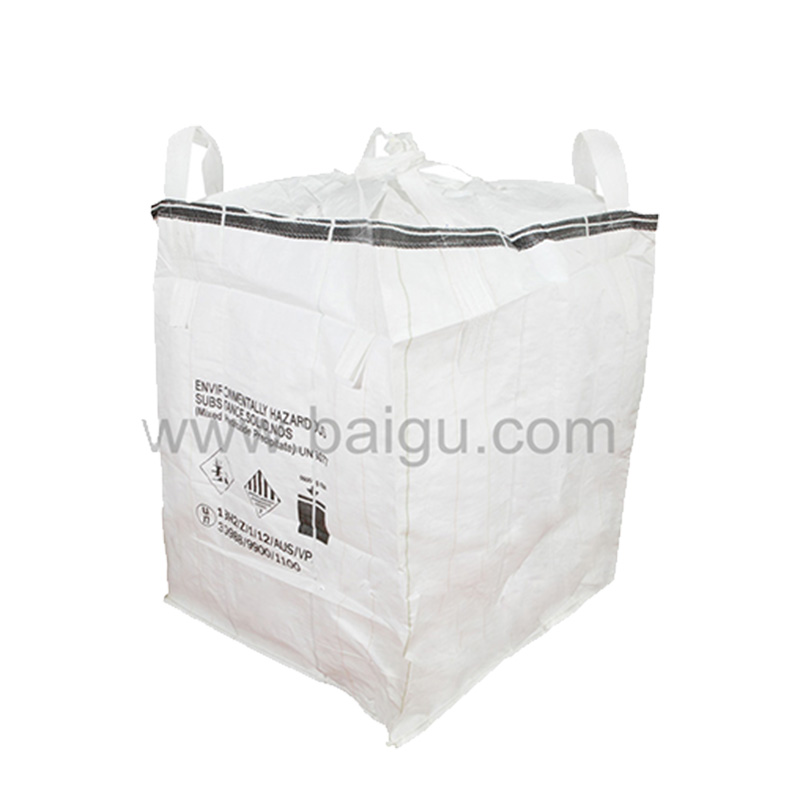
Transporting hazardous materials carries severe financial, legal, and environmental stakes. A single packaging failure can result in catastrophic spills, regulatory fines, and halted supply chains. Procurement and safety teams must navigate complex international regulations, such as the UN Recommendations on the Transport of Dangerous Goods, while matching specific chemical or physical hazards to the correct bulk packaging. Standard bulk bags are insufficient and illegal for these applications. You need specialized containers designed to withstand extreme stress. This guide provides a rigorous, technical framework for evaluating UN FIBC bags, verifying manufacturer credentials, and mitigating compliance risks before finalizing a purchase order. We will cover everything from regulatory baselines to performance testing, ensuring your next shipment meets all international safety standards.
Key Takeaways
Regulatory Alignment is Non-Negotiable: Your hazardous material's specific UN number and Packing Group (I, II, or III) dictate the exact UN FIBC bag specifications required.
Mandatory Performance Testing: Authentic UN bags must pass six rigorous physical tests (Drop, Topple, Righting, Tear, Stacking, and Top Lift) certified by an independent testing facility.
Vendor Accountability: A reliable UN bulk bag manufacturer must provide transparent, up-to-date third-party certificates and demonstrate robust internal batch-testing protocols.
Customization for Compatibility: Off-the-shelf solutions often fail; custom dangerous goods packaging—including specific liners and static control—is frequently required to prevent chemical degradation and combustion.
Shipper Liability: Legally, the shipper—not the packaging manufacturer—retains ultimate liability for ensuring the chemical compatibility of the payload with the FIBC material.
Navigating the Regulatory Baseline for UN FIBC Bags
Defining the exact legal and safety thresholds required for transporting your specific product is the first step in procurement. You must establish a strict regulatory baseline before evaluating physical bag properties. Skipping this step leads to compliance failures and unsafe transport conditions.
Understanding Packing Groups & Hazard Severity
The United Nations classifies hazardous materials into three distinct Packing Groups based on the degree of danger they present. This classification directly dictates the packaging requirements. You cannot guess this classification; it must align perfectly with your product data.
Packing Group
Danger Level
UN Marking
FIBC Usage Notes
Group I
High Danger
X
FIBCs are rarely used or permitted for these highly volatile materials.
Group II
Medium Danger
Y
Standard authorization for many industrial chemicals and powders.
Group III
Low Danger
Z
Common for less volatile materials, requiring baseline UN compliance.
The designated Packing Group dictates the maximum permissible gross mass (MPGM) and the volumetric capacity of the hazardous material FIBC. Legally, the shipper holds final responsibility for matching the product's Safety Data Sheet (SDS) with the correct Packing Group. Failing to align the SDS with the packaging specification exposes the shipper to severe regulatory penalties. We see companies face heavy fines simply because they mismatched the packing group on their shipping manifests.
Decoding UN Marking Codes for FIBCs
Every certified bag must display a permanent, legible UN marking. A typical marking looks like this: 13H3/Z/11 22/USA/M1234/10000/5000. Buyers must know how to read this code to verify compliance on the warehouse floor.
13H3: Denotes the specific bag type and material construction.
Z: Indicates authorization for Packing Group III materials only.
11 22: Represents the month and year of manufacture.
USA: Identifies the country authorizing the allocation of the mark.
M1234: The unique identification code of the manufacturer or testing facility.
10000/5000: Represents the stacking test load in kilograms and the maximum permissible gross mass in kilograms.
The specific UN FIBC design codes verify the structural type of the bag. 13H1 indicates woven plastics, uncoated, without a liner. 13H2 means woven plastics, coated, without a liner. 13H3 stands for woven plastics, uncoated, with a liner. Finally, 13H4 represents woven plastics, coated, with a liner. Knowing these codes prevents ordering the wrong structural type for your specific chemical payload.
Evaluating UN FIBC Bag Specifications for Your Hazardous Material
Matching the physical and chemical properties of the payload to the bag's construction prevents catastrophic failures during transit. Procurement teams must look closely at UN FIBC bag specifications to ensure absolute compatibility. A generic bag will not survive the rigors of hazardous transport.
Material and Construction Requirements
Evaluate the woven polypropylene (WPP) fabric weight, measured in grams per square meter (gsm). Heavier fabrics generally offer higher puncture resistance. UV stabilization is mandatory, as polypropylene degrades rapidly under sunlight. Seam construction also requires scrutiny. Fine powders necessitate sift-proof felt or cord seams rather than standard stitching to prevent hazardous dust leaks during vibration.
Assess the Safe Working Load (SWL) and Safety Factor (SF). Standard single-trip bags typically use a 5:1 SF. However, UN regulations mandate a strict 6:1 SF for all certified bags, regardless of whether they are intended for single or multiple trips. Note that reusing UN bags is highly restricted and requires stringent re-qualification processes. We always recommend single-trip use for hazardous materials to eliminate cross-contamination risks.
Liners and Barrier Coatings
Determining whether a standard coated bag (13H2) is sufficient or if a specialized inner liner (13H4) is mandatory depends entirely on the payload. Custom dangerous goods packaging often incorporates advanced chemical and moisture barriers to maintain product stability.
High-density polyethylene (HDPE) provides excellent general chemical resistance for most industrial applications.
Ethylene vinyl alcohol (EVOH) serves as a superior gas and odor barrier, preventing toxic fumes from escaping.
Aluminum foil laminates are necessary for highly volatile or moisture-sensitive materials that react violently with humidity.
Specify the exact liner thickness in gauge or microns. Determine the insertion method carefully. Tabbed or glued liners prevent the liner from discharging alongside the product, mitigating severe operational hazards when emptying the bag into a hopper.
Static Control in Explosive & Flammable Environments
Handling combustible powders or operating in environments with flammable gases requires strict electrostatic control based on IEC 61340-4-4 standards. Ignoring static control leads to dust explosions.
Static Control Type
Characteristics
Usage Restrictions
Type A
No special electrostatic safety features.
Never use near flammable gases or combustible dusts.
Type B
Low breakdown voltage (less than 6kV).
Prevents propagating brush discharges.
Type C
Conductive bags requiring continuous ground.
Must maintain less than 10^7 ohms resistance during use.
Type D
Dissipative bags that disperse static safely.
Does not require grounding, but check nearby conductors.
The 6-Point Performance Testing Framework
Laboratory testing translates directly to real-world transportation survivability. Authentic UN bags must pass six specific physical tests certified by an independent facility. You cannot rely on manufacturer claims without this third-party validation.
Impact and Stability Tests
These tests simulate the physical trauma of loading, unloading, and transit accidents. They carry strict pass/fail metrics that determine if the bag can legally carry hazardous goods.
Drop Test: Simulates falls from specific heights based on the authorized Packing Group. Bags rated for Packing Group II are dropped from 1.2 meters. Packing Group III bags are dropped from 0.8 meters. The bag must show no loss of contents.
Topple Test: Evaluates seam and fabric integrity when the fully loaded bag is toppled from a specified height.
Righting Test: Assesses lifting loop strength. A fallen bag is hoisted from an on-its-side position using only two of its lift loops to simulate rough handling by forklift operators.
Tear Test: A 100mm knife cut is initiated on the bag at a 45-degree angle. The bag is then loaded to capacity. The tear must not propagate more than 25% of its original length under dynamic load.
Load and Pressure Tests
These tests ensure the bag maintains structural integrity under sustained pressure and extreme lifting forces encountered in maritime shipping and warehouse stacking.
Stacking Test: Ensures the bag withstands the weight of superimposed bags during prolonged storage and transit. The bag is subjected to a top load equal to 1.8 times the maximum permissible gross mass for a duration of 28 days.
Top Lift Test: Validates overall structural integrity. The bag is lifted from the top and held for 5 minutes at 6 times its maximum rated load capacity, verifying the mandatory 6:1 Safety Factor.
Validating Third-Party Test Certificates
Buyers must audit the provided certificates rigorously. Check the issue and expiration dates. Verify the testing laboratory's accreditation status with national authorities. Most importantly, ensure the tested prototype’s dimensions, fabric weight, and closure mechanisms perfectly match the specifications on your purchase order. Any deviation renders the certificate invalid for your specific bag. We often find discrepancies between the tested prototype and the delivered production run, which completely voids the UN certification.
Assessing a UN Bulk Bag Manufacturer: Beyond the Spec Sheet
Procurement teams must differentiate between transactional suppliers and strategic packaging partners. The reliability of a UN bulk bag manufacturer dictates the safety of your supply chain. You need a partner who understands the legal weight of their product.
Quality Management Systems (QMS) & Competent Authority Approvals
ISO 9001 certification is a baseline requirement, not a differentiator. You must verify approvals from competent national authorities that authorize the manufacturer to issue official UN certification marks. Examples include the DOT in the USA, BAM in Germany, or IIP in India. If the hazardous material is a pharmaceutical or food-grade chemical, evaluate the manufacturer's cleanroom and hygiene standards, looking for ISO 22000 or BRCGS certifications. A clean facility indicates disciplined manufacturing processes.
Traceability and Batch Testing Protocols
Robust traceability isolates failures and prevents widespread supply chain disruptions. Look for individual bag tracking mechanisms, such as unique QR codes or serialized lot numbers printed directly on the fabric. Evaluate the manufacturer's in-house laboratory capabilities. A reliable partner conducts ongoing tensile, drop, and electrostatic testing from every production run to ensure continuous compliance with the original UN certificate. They should not rely solely on the initial prototype test from three years ago.
Global Supply Chain Stability & Lead Times
Evaluate the manufacturer's raw material sourcing, specifically polypropylene resin. Assess production capacity redundancy. Analyze the geopolitical risks associated with overseas manufacturing versus domestic inventory programs to ensure uninterrupted supply during market volatility. A manufacturer with multiple production facilities offers better protection against regional disruptions.
Implementation Risks and Mitigation Strategies
Common failure points often emerge after the purchase order is signed. Anticipating these implementation realities prevents costly operational delays and safety incidents on your plant floor.
Handling and Filling Equipment Compatibility
A frequent risk involves spouts, duffle tops, or lifting loops that do not align with existing plant infrastructure. This misalignment leads to unsafe manual handling or product degradation. Mitigate this by requesting custom prototype samples for a dry run on the filling line before authorizing full-scale production. We always mandate a physical fit-test with the actual filling spout.
Thermal Limits and Chemical Degradation
High filling temperatures, specifically hot-fills exceeding 80°C (176°F), can soften the polypropylene structure, severely compromising the bag's integrity. Mitigate this risk by specifying heat-stabilized fabric or adjusting process cooling lines prior to the packaging phase. Polypropylene loses tensile strength rapidly when exposed to high heat, which invalidates the 6:1 safety factor.
Storage Degradation and UV Exposure
Polypropylene degrades rapidly under ultraviolet light. This degradation compromises the safety factor even if the bags are stored outdoors for short periods. Establish strict indoor, dry storage protocols. Furthermore, audit the manufacturer's UV inhibitor additive ratios, which are measured in Kilo Langley (KLY) units. Do not leave UN bags sitting in the sun while waiting for transport.
Avoiding Counterfeit Hazardous Material FIBCs
Unscrupulous vendors may print fake UN codes on standard 5:1 SF bags without conducting actual laboratory testing. Mitigate this severe risk by cross-referencing the manufacturer ID on the UN marking with the authorizing national competent authority's database. Demand full documentation trails from the raw resin to the finished bag. If the price seems too good to be true for a UN certified bag, it is likely counterfeit.
Conclusion
Procuring UN FIBC bags is an exercise in risk management, not cost reduction. The upfront investment in compliant, properly specified packaging is negligible compared to the liabilities of a hazardous material spill. Prioritize vendors who offer transparent access to third-party testing data, possess active competent authority approvals, and demonstrate deep expertise in custom dangerous goods packaging rather than just selling commodity bags.
Identify your product's Safety Data Sheet (SDS), UN number, and associated Packing Group.
Request redacted UN certificates and design specification sheets from three potential manufacturers.
Order a physical prototype bag for compatibility testing with your plant's filling, grounding, and discharging equipment.
Audit the manufacturer's internal batch testing logs and traceability protocols before signing the final contract.
FAQ
Q: What is the difference between a standard FIBC and a UN FIBC bag?
A: Standard FIBCs typically have a 5:1 Safety Factor for single trips. UN FIBC bags require a mandatory 6:1 Safety Factor, even for single trips, and must pass a rigorous 6-point performance test certified by an independent, competent authority-approved laboratory.
Q: Can I reuse a UN certified bulk bag?
A: Reusing UN bags is highly regulated. While the 6:1 Safety Factor implies durability, multi-trip use requires strict re-qualification, inspection, and tracking processes mandated by national transport authorities. Single-trip UN bags must never be reused.
Q: Who is legally responsible if a UN bag fails during transport?
A: The shipper holds ultimate legal liability. While the manufacturer must provide a compliant bag, the shipper is responsible for ensuring the chemical compatibility of the payload with the packaging and verifying the correct Packing Group assignment.
Q: How long is a UN FIBC test certificate valid?
A: UN test certificates are generally valid for a specific period, often up to three years, depending on the issuing competent authority. However, any change in the bag's design, material, or dimensions immediately invalidates the certificate.
Q: What does the 'Y' or 'Z' mean on a UN bulk bag marking?
A: These letters indicate the authorized Packing Group. 'Y' means the bag is tested and approved for Packing Groups II (medium danger) and III (low danger). 'Z' means it is only approved for Packing Group III materials.